Why Lowbed Semi-Trailer Demand Is Booming Across African & Middle East Construction Markets
Introduction
If you’ve been tracking heavy transport tenders across Kenya, Ghana, Nigeria and the Gulf states over the past six months, you’ve likely noticed one trend: lowbed semi-trailer inquiries are climbing fast.
Over the past quarter, we’ve connected with dozens of fleet operators and construction contractors across the region. While most are scaling up their lowbed trailer fleets to meet project timelines, a large number of first-time buyers still treat this purchase the same way they’d order a standard flatbed. More often than not, they end up with units that either hold up poorly on local road conditions or aren’t properly sized for the equipment they actually move.
This market insight breaks down what’s driving the demand surge, which trailer configurations are winning on local job sites, and the common missteps that cost operators money down the line.
What’s Fueling Lowbed Semi-Trailer Demand Right Now
The growth isn’t random. It’s tied directly to three real shifts happening on the ground across the region.
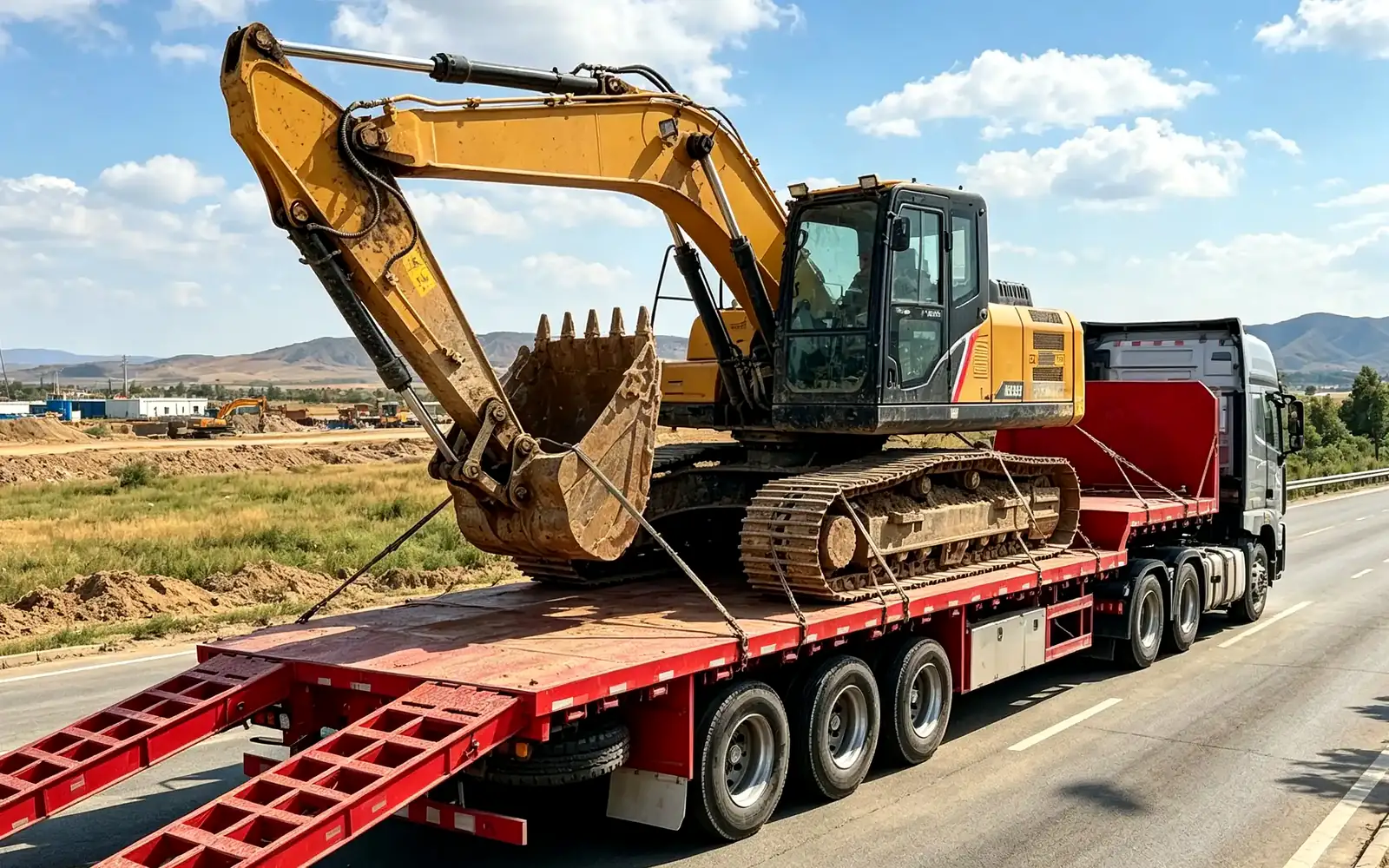
First, large-scale infrastructure projects are transitioning from the planning phase to on-site execution. Road rehabilitation, port capacity expansions and new housing developments all drive demand for moving bulldozers, excavators, rollers and cranes across job sites. For many contractors, job-by-job lowbed rental has grown more costly than operating a dedicated fleet, particularly when long-term project pipelines are confirmed.
Second, mining production is ramping up across West and Southern Africa. Heavy haul trucks, crushing plants and drill rigs need frequent short-distance moves between pit areas and stockyards. Standard flatbed trailers cannot handle the load capacity and height clearance of this machinery, so dedicated lowbed units are the only viable choice.
Third, cross-border trade in used construction equipment has grown significantly. Dealers moving machines between ports and inland buyers create steady demand for heavy haulage services. Many small and mid-sized fleets are adding one or two lowbeds specifically to capture this growing spot market.
Which Lowbed Configurations Are Trending Locally
Not all lowbeds fit every job. Through our customer deliveries and market feedback, we’re seeing clear segmentation in the African and Middle East lowbed semi-trailer market.
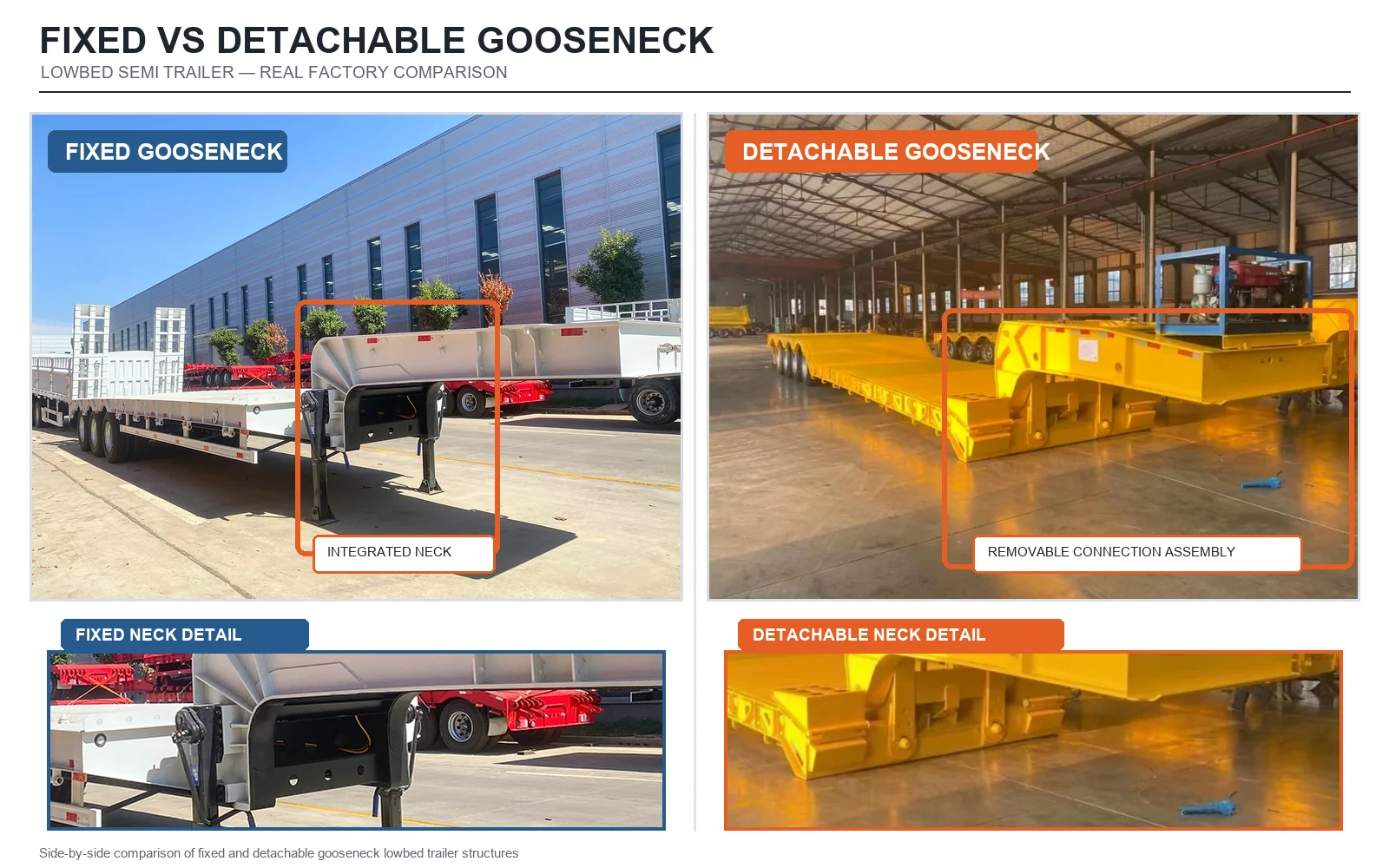
20–60 ton fixed gooseneck lowbeds remain the highest-volume category. They’re versatile enough for standard excavators, backhoes and road construction machinery, and they come with a lower price point and simpler maintenance. For general construction fleets that handle mixed cargo on top of equipment moves, this is still the sweet spot.
80 ton+ detachable gooseneck lowbeds are the fastest-growing segment. Large mining contracts and wind farm projects need to move extremely heavy and tall machinery. Being able to remove the gooseneck makes loading safer and lets operators haul taller equipment that wouldn’t clear a standard neck design.
One important note: lightweight lowbed designs popular in Europe are not gaining traction here. Operators prioritize reinforced main beams and heavy-duty suspension over weight savings. Fragile lightweight builds crack quickly on unpaved access roads and lose value much faster.