

Semi-Trailer Brake Systems: Why Failures Happen On African Routes And How To Spec For Reliability
It Started With A Faded Brake Pedal On A Tuesday Morning
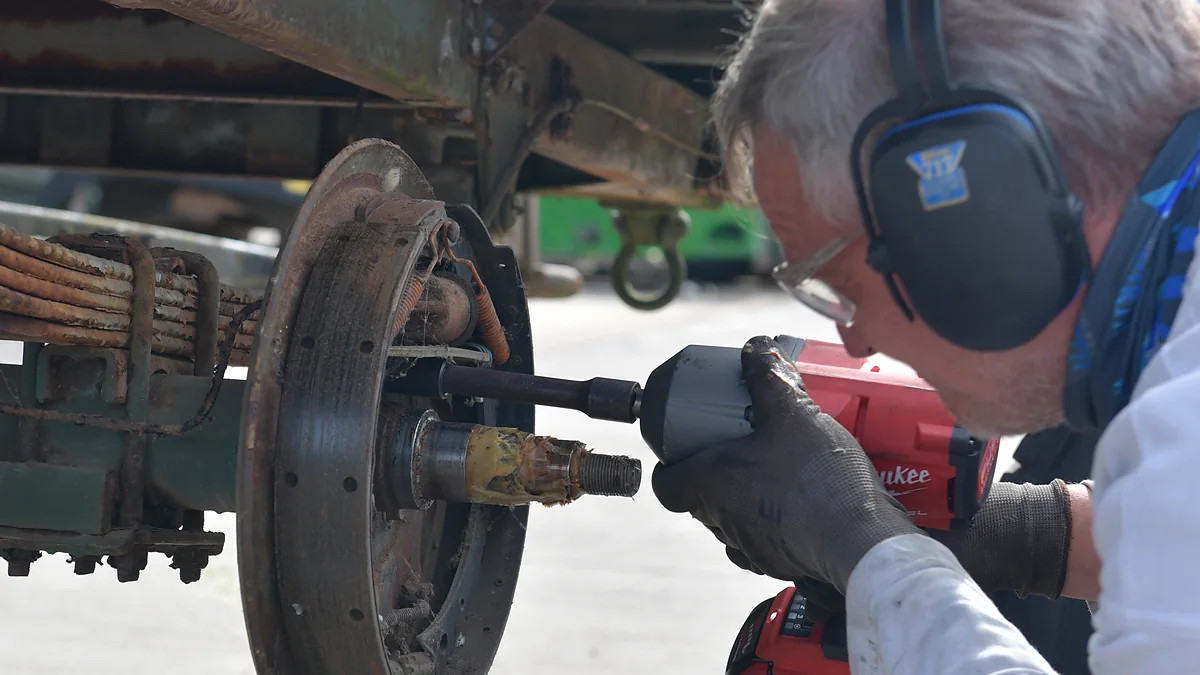
A fleet manager in Nairobi told us this story earlier this year. One of his tri-axle flatbeds was hauling construction steel down the escarpment road toward Mombasa. About halfway down, the driver noticed the brake pedal going soft. By the time he reached the lower gear change, the drums were smoking. He managed to pull into an emergency ramp, but the trailer sat at a roadside workshop for four days. The damage:
- Both rear-axle brake drums had split clean through. They couldn’t be welded shut — both had to be cut off and replaced.
- All six wheel cylinders on the tri-axle had seized solid from dust and heat. Every single one came off for a new unit.
- The steel showed up at the site four days late. The contractor invoked the late-delivery clause in the haulage agreement, and the fleet ate the penalty.
The truck itself was fine. The semi-trailer brake system was the weak link — and it almost caused a serious accident.
This isn’t an isolated story. Across East African mountain passes, West African coastal highways and Gulf region desert routes, brake-related issues account for a disproportionate share of trailer downtime and road incidents. The problem usually isn’t that brakes are “bad.” It’s that they’re specified, maintained or operated in ways that don’t match local conditions.
Why Trailer Brakes Fail More Often In This Region
If you operate in Europe or North America, a brake system can run 300,000+ kilometers before a major overhaul. In many African and Middle East operating environments, that figure drops to 100,000–150,000 km. Four factors drive that gap:
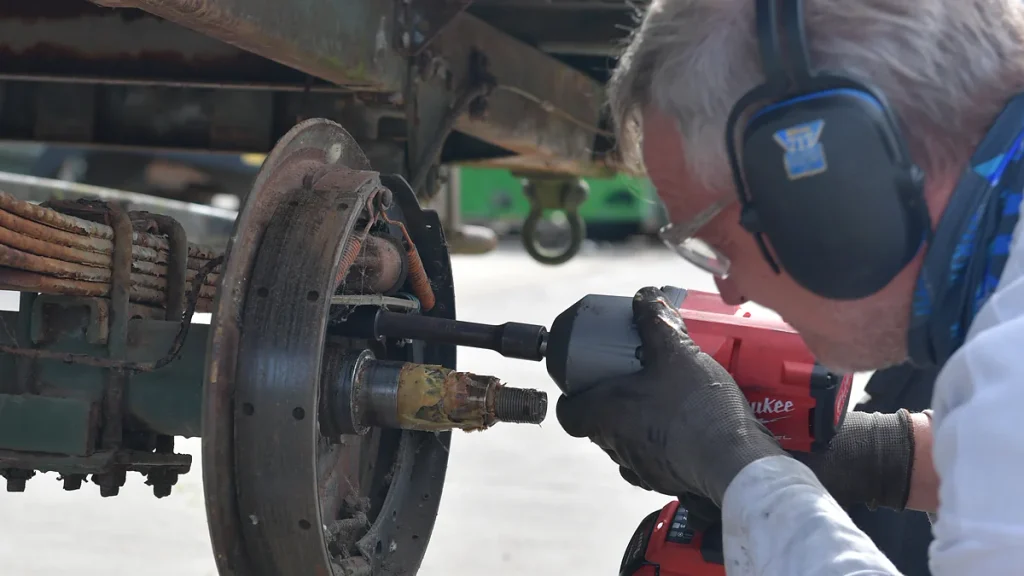
- Dust gets everywhere. Unpaved feeder roads and construction site access roads throw fine particulate into every brake component. Dust mixes with lubricant on S-cam shafts and causes them to seize. It wears brake linings faster. It gets past worn seals and contaminates wheel cylinders. A brake system that runs clean on a paved highway is under constant attack here.
- Heat builds faster than the drums can get rid of it. A fully loaded trailer crawling down a long escarpment in 35°C heat is riding the brakes almost nonstop. Once the drum surface passes 250°C, the lining material loses its bite — the driver stands on the pedal harder, which makes more heat, which makes the linings slip even more. It’s a self-feeding loop, and it’s exactly how you end up with smoking drums on the shoulder of the road.
- Overloading is a daily reality. Even well-intentioned operators sometimes run above rated capacity, especially on short-haul construction moves. Every extra ton shifts more work onto the brake system. Brake torque that was adequate at design load becomes marginal at 120% load.
- Infrequent professional inspection. In remote areas, trailers often get brake attention only when something is obviously wrong — a locked wheel, a fluid leak, a warning light. By that stage, the damage has usually spread beyond a simple lining change.
Understanding The System: Six Components And Where They Wear
You don’t need to be a brake engineer, but knowing how each part works helps you spot problems early and ask suppliers the right questions.
- Air compressor & reservoirs The tractor supplies compressed air; the trailer has its own reservoir. If air pressure drops below 60 psi, spring brakes engage automatically — this is your emergency and parking brake. Check daily: listen for air leaks with the system fully charged.
- Brake chambers Convert air pressure into mechanical force. Two sizes are common:
- 30/30 chambers — standard, for general cargo30/36 or larger — heavy-duty, for construction and mining haulage
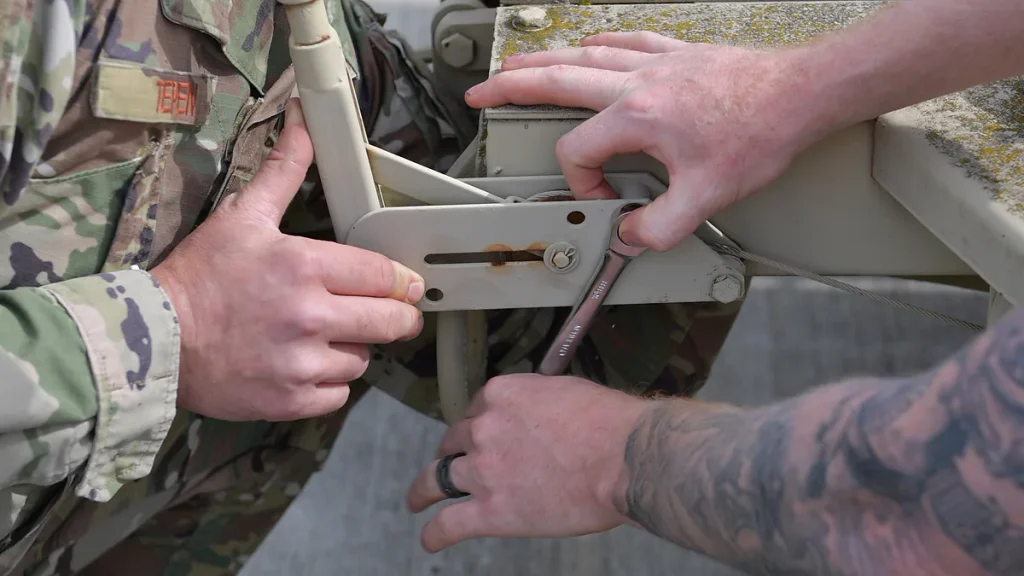
- S-cam & slack adjuster The S-cam spreads the brake shoes apart when the chamber pushes the slack adjuster. Two types:
- Automatic slack adjusters (ASAs) — maintain proper shoe-to-drum clearance on their own
- Manual adjusters — require regular checking; plan to inspect every 5,000–10,000 km
- Brake shoes & linings The friction material that presses against the drum. Lining quality varies enormously:
- Cheap linings — wear fast, fade at lower temperatures, can glaze over after a single hard stop
- Premium linings — rated for 350°C+ continuous use, worth the extra cost in heavy-haul and mountainous terrain
- Brake drums Absorb and dissipate heat. Standard drums are fine for moderate use. For heavy-haul or mountain routes, look for:
- Thicker-walled drums, or
- Vented drum designs for better heat dissipation
- ABS modulator valves Newer trailers use ABS to fine-tune braking at every wheel. Don’t write it off as a wet-weather feature — on dusty, uneven ground where left and right wheels have different grip, ABS stops wheels from locking and skidding. No ABS on your trailer? Retrofitting pays off in safety, and it can lower what you pay for insurance too.
Matching Brake Spec To Your Operation
There is no single “best” brake setup. The right specification depends on what you haul and where.
| Operating Profile | Recommended Brake Spec |
|---|---|
| General cargo, paved highways, moderate loads | Standard 30/30 chambers, standard drums, ABS |
| Construction equipment, mixed roads, 40–60 ton | 30/36 chambers, heavy-duty linings, thicker drums |
| Mining / heavy haul, 80 ton+, mountain passes | 30/36 or larger, vented drums, premium 350°C+ linings |
| Desert / high-temperature routes | Heat-rated linings, larger chambers, verify drum cooling airflow |
When you compare quotes, ask specifically what brake chamber size, lining grade and drum specification each supplier is offering. Two trailers with identical axle counts can have very different heavy haulage braking safety performance if the underlying brake components are different grades.
A 10-Minute Pre-Trip Brake Check Any Driver Can Do
You don’t need a workshop to catch brake problems early. Train your drivers to run through these five steps before every long haul — it’s the most cost-effective trailer brake maintenance habit you can build.
- Air leak test Charge the system to governor cut-out (normally 120–130 psi), switch off the engine, and watch the gauge for 60 seconds. Anything over a 2–3 psi loss means you’ve got a leak. Walk the trailer and track down the hiss — check chambers, valves and air lines first.
- Brake application test With the engine running and trailer coupled, have a helper watch each wheel. Apply the brakes firmly. Every brake chamber should actuate — you’ll see the push rod extend. If one doesn’t move, that wheel isn’t braking at all.
- Push rod stroke check Mark the push rod at the chamber face with the brakes off. Apply the brakes and measure the travel. More than 2 inches (50mm) on a 30-series chamber = brakes need adjusting.
- Visual drum inspection Look for three warning signs:
- Cracks on the drum surface
- Heat discoloration (blueing)
- Oil or grease on the drum surface
- Tire condition cross-check Brakes and tires work together. Uneven tire wear can indicate brake balance issues — if one axle’s tires wear faster, that axle may be doing more braking work than the others.
This takes minutes and catches problems before they become the smoking-drum scenario.
When Repair Isn’t Enough: Four Signs You Need A Brake System Upgrade
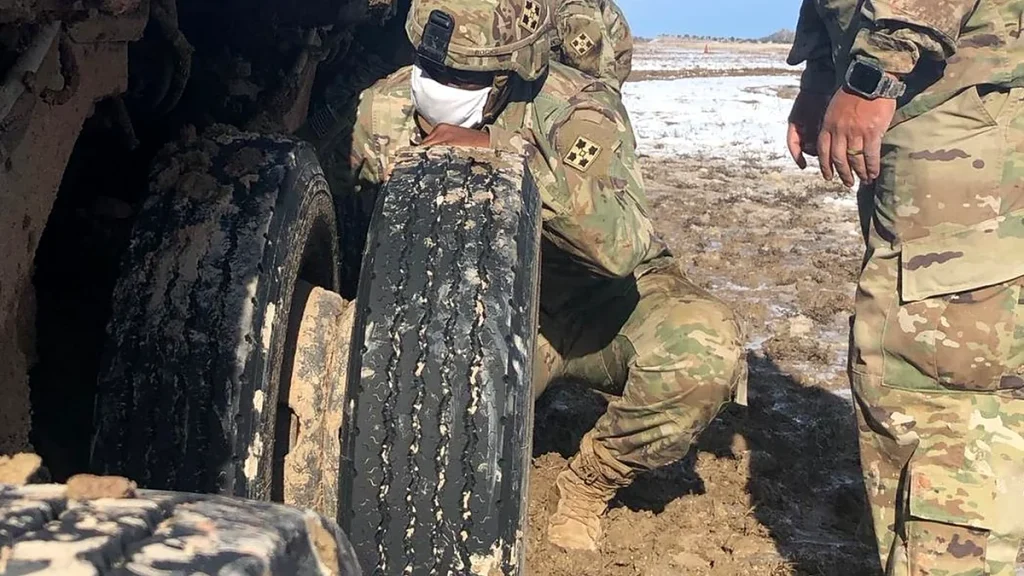
Swapping out parts piece by piece won’t always get to the root cause. If any of these patterns sound familiar, think about a full brake system upgrade rather than another round of spot repairs:
- Repeated brake fade on the same route. Your brake capacity is undersized for the load and terrain. Larger chambers or vented drums may be needed.
- Premature lining wear across all axles. Usually a sign of cheap linings or brake force imbalance. Upgrade to premium heat-rated linings and verify ABS function.
- Chronic air leaks that return after repair. Corroded air lines or degraded seals. A full air system overhaul — lines, valves, gaskets — is cheaper than chasing leaks one by one.
- No ABS on a trailer operating in mixed traction conditions. ABS reduces skid risk and can lower insurance premiums. Retrofit kits are available for most axle configurations.
Closing Thought
Brake systems are the one component on a semi-trailer where “good enough” is never actually good enough. A cracked frame costs you money. A failed brake system can cost lives.
Spec’ing new trailers and need the brake system matched to your routes and loads? Or fighting repeated brake failures on your existing fleet? Reach out to our sales engineering team. We’ll walk you through chamber sizing, lining specs, drum choices and ABS options for your operating conditions — and give you a straightforward quote that doesn’t compromise on braking performance.