

Powder Tanker Semi Trailer: Types, Capacities and Buying Guide
Introduction
Across Africa, construction programs keep expanding — highways, housing estates, dams and industrial parks — and nearly every one of them depends on one material arriving on schedule: cement. Moving bagged cement is slow, labour-heavy and exposes the product to moisture and theft. That is why more fleet owners in Nigeria, Kenya, Ghana, Tanzania and beyond are adding a powder tanker semi trailer to haul bulk cement directly from the grinding plant or import terminal to the batching plant.
This guide walks through the tank types you will be offered, which capacity fits which job, the specifications that actually decide discharge performance on site, and how to verify a factory before you send a deposit.
What a Powder Tanker Semi Trailer Carries — and What It Doesn’t
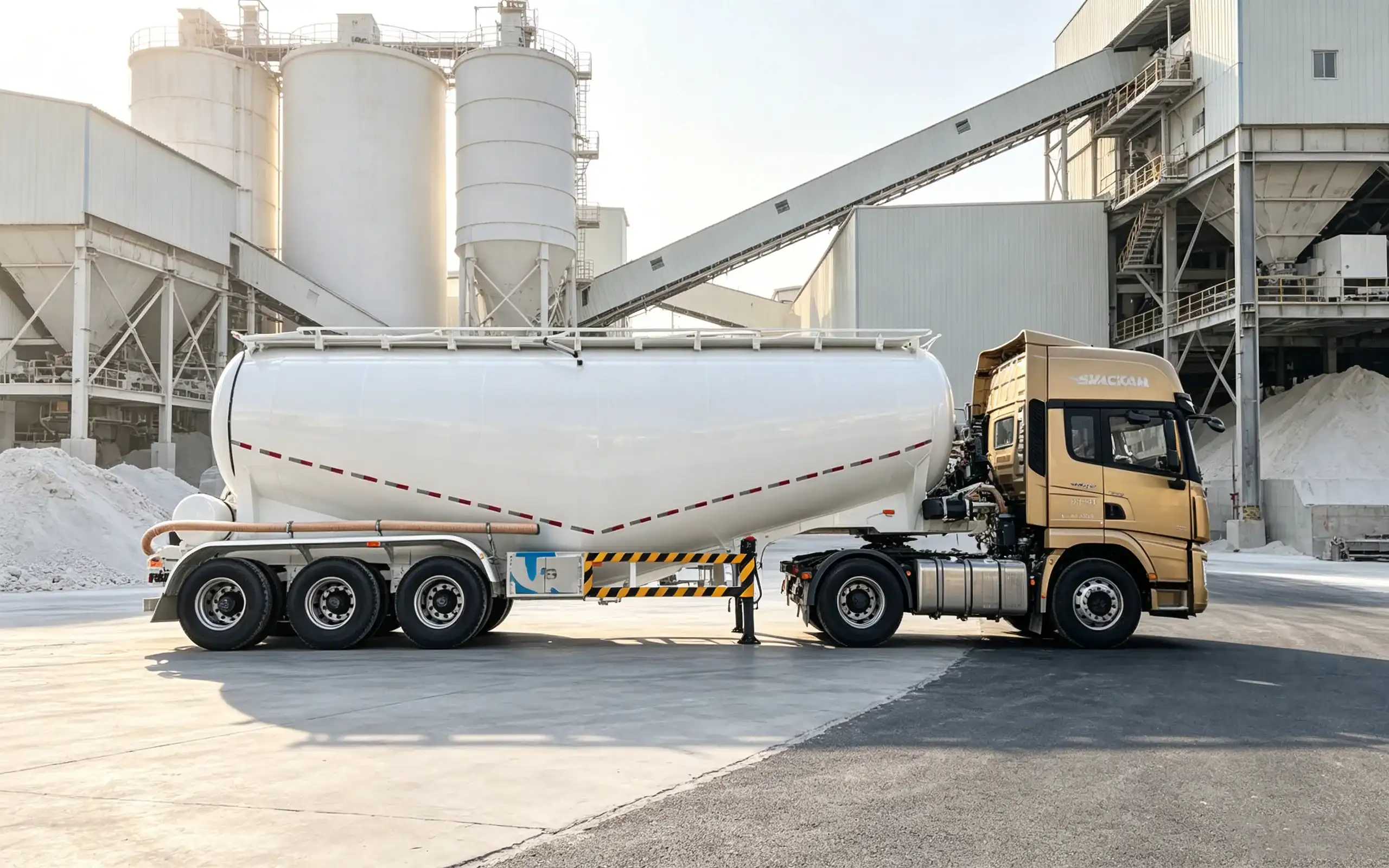
A powder tanker semi trailer is a pneumatic dry-bulk trailer. Compressed air is forced through a fluidized bed at the bottom of the tank, turning the powder into a fluid-like state so it can be pushed through a discharge pipe into a silo — no bagging, no shovels, no product handling.
Typical cargoes include bulk cement, fly ash, lime powder, flour and other dry powder materials. What it must not carry is liquid. Fuel, water and chemical loads create different pressure and corrosion conditions and require a dedicated liquid tanker semi trailer. Using the wrong tank risks tank damage, contamination and a failed delivery — a mistake first-time buyers occasionally make when a “tanker” quote looks cheap.
V Shape or W Shape: Choosing the Right Tank Type
Two tank geometries dominate the bulk cement market:
- V shape tank. The two bottom chambers converge toward a single discharge channel. Gravity assists the powder flow, so unloading is faster and residual material is lower. If your fleet serves cement terminals or batching plants that charge for waiting time, the V shape pays for itself.
- W shape tank. Additional chambers increase the volume you can carry within the same legal envelope. It is the choice where gross-weight rules are generous and you need maximum payload per trip.
Both are available in carbon steel or aluminum. Aluminum cuts tare weight noticeably — worth considering where axle-load limits are enforced, because every kilogram of tank you save is a kilogram of cement you can invoice.
You may also see vertical cement tank trailers in the market. These silo-type tanks are mainly used for plant feeding and short-distance transfers rather than long-haul road transport, so confirm the usage scenario before comparing prices across tank styles.
Which Capacity Fits Your Work: 30, 35, 45 or 60–70 CBM
Capacity is the first decision, and it should follow your routes and your customer’s silo sizes, not the salesperson’s preference. The table below matches the standard configurations:
| Tank capacity | Approx. cement payload* | Best suited for |
|---|---|---|
| 30 CBM | ~33–36 t | City deliveries, routes with tight bridge limits, small batching plants |
| 35 CBM | ~38–42 t | The all-round choice: cement depots, mid-size plants, mixed road conditions |
| 45 CBM | ~48–54 t | Long-haul plant-to-project routes where higher gross weights are permitted |
| 60–70 CBM (V shape) | Maximum volume | High-volume terminal transfer on dedicated, paved corridors |
*Cement bulk density varies with aeration; treat payload figures as planning estimates and confirm against your local gross-weight rules.
For most African fleets, 35 CBM is the sweet spot. It pairs with a standard 3-axle tractor within common gross-weight limits, serves nearly every commercial silo, and holds resale value because demand for the spec is constant. Unless you have measured overweight-risk data for your routes, starting the fleet at 35 CBM and moving up to 45 CBM or a 60–70 CBM V shape on specific corridors is the lower-risk sequence.
Specs That Decide Performance on African Roads
1. Tank steel and tare weight
Insist on high-strength wear-resistant steel. A dual-alloy structure keeps the tank light and durable at the same time — loading powder is abrasive, and thin, soft steel tanks lose thickness (and value) within a few seasons. Ask each supplier to state tank steel grade, plate thickness and tare weight in the quotation, in writing.
2. The discharge system: fluidized bed, tank angle and compressor
This is where cheap trailers separate themselves from good ones — usually after you have already paid. Three details matter:
- Fluidized bed area and tank angle. A wide-area bed with a large-angle tank unloads faster and leaves less residue behind.
- Intake pipe layout. A linear arrangement keeps airflow smooth and unloading efficient instead of surging.
- Compressor capacity and engine. A typical factory standard pairs a diesel engine (for example a Weichai 4102) with a 12 CBM/min air compressor; other brands are usually optional. Undersized air flow is the most common cause of slow discharge complaints.
Ask for the discharge time for a full load and the residual quantity per unload — in writing, with a test video.
3. Running gear matched to your roads
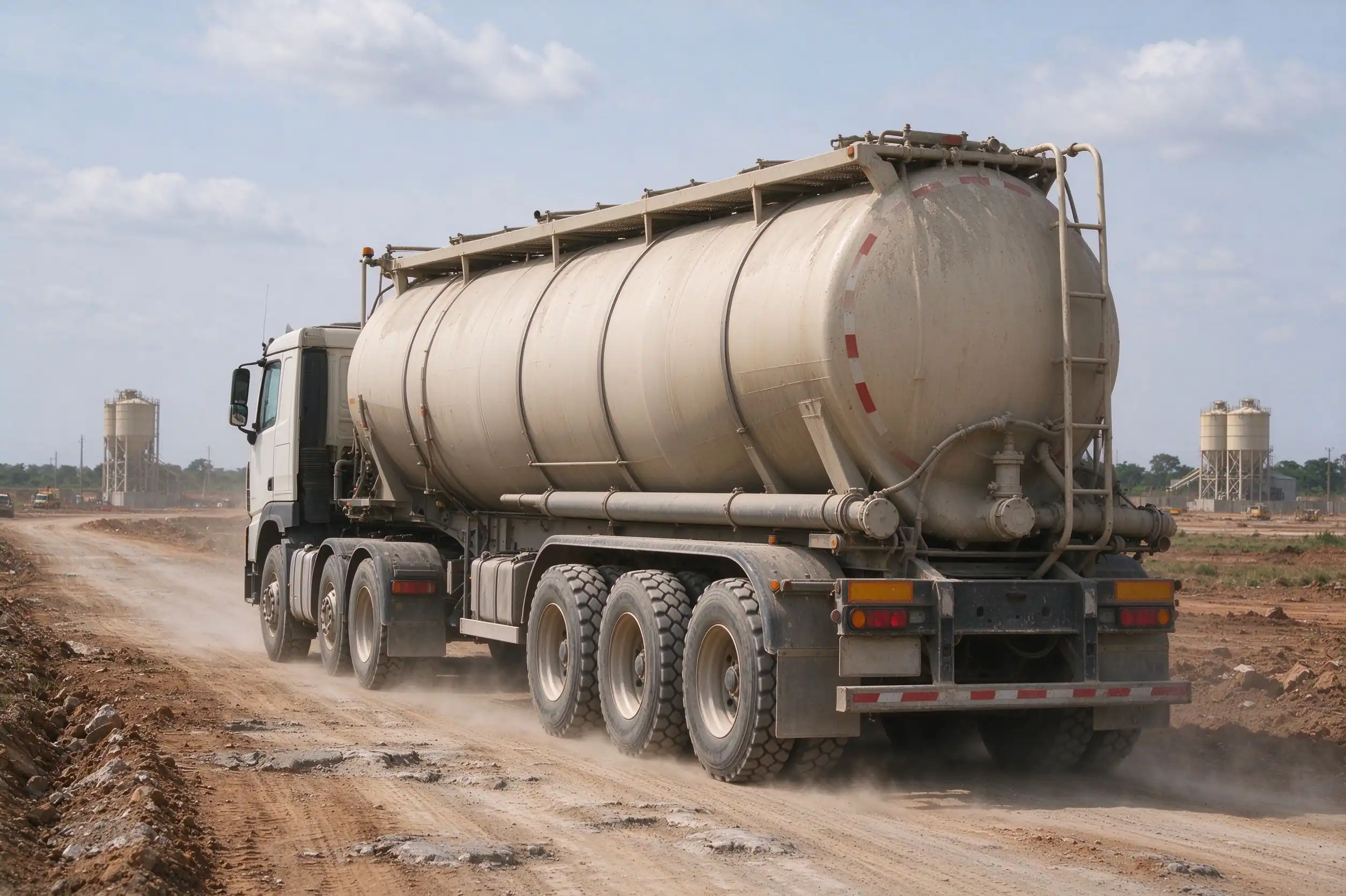
Axle configuration, suspension and tires should be specified for the roads you actually run, not for the brochure photo. If your routes include unpaved plant access roads, reinforced suspension and a conservative axle-load plan will cost a little payload and save a lot of downtime.
How to Verify a Powder Tanker Factory Before You Order
Search interest in “cement tanker semi trailer factory” and “powder tanker semi trailer manufacturer” keeps growing — and so does the number of trading companies presenting themselves as factories. Before paying a deposit:
- Request the tank pressure-test certificate and welding inspection records for your specific unit.
- Ask for a live discharge test video (or a video call from the workshop floor), timed with the residue visible at the end.
- Confirm factory scale and QC capability. A credible manufacturer can show you real production data — for reference, our facility covers 400,000+ square meters, builds around 20,000 trailers a year across 200+ types, and staffs 100+ technicians and 50+ QC personnel.
- Get the warranty in writing — one year on main parts of the semi trailer is a reasonable standard.
- Check spare-part and compressor service arrangements before you need them, not after.
Practical Questions to Send Your Supplier
- Discharge time and residual quantity for a full 35 CBM load?
- Compressor brand and CFM (CBM/min) rating — and can it be upgraded?
- Tare weight in carbon steel versus aluminum, and the price difference?
- Axle configuration and suspension you recommend for my routes and gross-weight rules?
- Which destination ports do you ship to, and what is the current delivery time?
A professional factory will answer with specific numbers, usually within a day — vague answers at this stage predict vague deliveries later.
Conclusion
Choosing a powder tanker semi trailer comes down to three things: the right capacity for your routes (35 CBM for most fleets), a discharge system engineered for speed and low residue, and a factory you have verified rather than assumed. Get those three right and the trailer becomes the most productive asset in a bulk cement fleet.
You can review the full specifications of the powder tanker semi trailer range — 30, 35 and 45 CBM standard tanks plus 60–70 CBM V shape configurations — and request a factory-direct quote by sending your required configuration and destination port. Our engineers reply within 24 hours.
Related Reading