

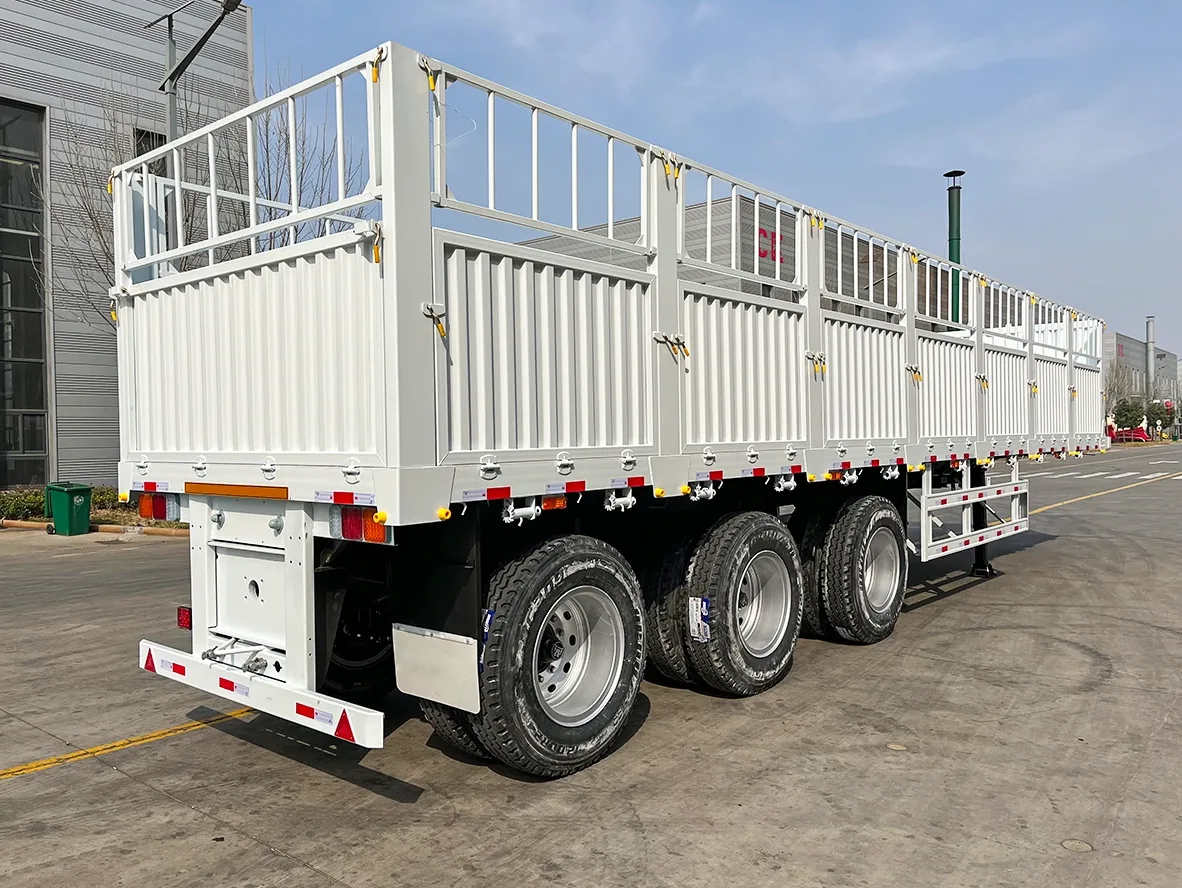
Fence Semi Trailers in Africa: Livestock Corridors and Cargo Runs Driving Demand
Two trailers, two worlds, rolling out of the same factory gate. Up north, along the livestock belt linking the Ethiopian highlands and East African rangelands to the ports and onward to Gulf markets, open-sided cages carry live cattle, sheep and goats. Down south that same month, the very same chassis is hauling bagged fertilizer, cement, timber formwork and light industrial cargo along the ordinary freight routes. The vehicle underneath both operations is the same: the fence semi trailer, known in many markets as a stake trailer. Search interest from African buyers reflects the split — queries arrive both from livestock operators looking for livestock fence trailer configurations and from general freight fleets comparing fence cargo semi trailer specs. This article looks at what is driving demand on both sides, and what the spec sheet should contain.
What Is a Fence Semi Trailer?
A fence semi trailer replaces the solid walls of a box trailer or the low panels of a side wall semi trailer with an open structure of vertical stakes and horizontal rails. The standard fence height in our lineup is 1800 mm, and it can be customized higher or lower around the cargo profile. The open rail structure does three jobs at once: it restrains loose and stacked cargo without hiding it from customs or weighbridge inspection, it allows airflow — which matters for both live animals and bagged agricultural goods — and it keeps tare weight well below a box van semi trailer of equivalent length.
For operators running mixed calendars — harvest season cargo, dry-season livestock — the fence layout also converts: panels and gates can be specified so the same trailer serves as a near-flatbed for machinery or palletized loads when the rails are not needed.
Livestock Corridors: Where Fence Trailers Prove Their Worth
East Africa runs one of the largest live animal trade flows in the world, moving cattle, sheep and goats from highland and rangeland sourcing areas through assembly markets to export ports serving Gulf markets, alongside domestic distribution that feeds growing cities. On those corridors, an open fence structure is not a styling choice — it is how the load breathes, how handlers inspect and water animals at rest stops, and how loading and unloading happens without ramps built for pallets.
The livestock transport spec comes down to just a handful of details. The 1800 mm fence height, fitted with optional gates, is built around moving animals safely, and purpose-built cattle configurations are available directly from the factory. Stake spacing, floor material and drainage, internal gates for penning, and extra reinforcement at the points where animals lean and loads shift — each of these is a line item on the order sheet, and each one costs less to specify correctly at the factory than to rebuild after a season on rough corridors.
Cargo Runs: From Farm Inputs to Building Materials
The cargo case is broader. Across African distribution routes, fence trailers carry bagged fertilizer and grain, cement and construction formwork, timber, steel mesh, empty cylinders, palletized consumer goods and light machinery — freight that needs restraint and ventilation more than weather sealing. The fence semi trailer lineup covers this work with three axle configurations:
| Configuration | Payload Range | Axles & Rating | Tires |
|---|---|---|---|
| 2 axle | 20 – 40 t | 2 × 13/16 t | 8 × 12R22.5 |
| 3 axle | 30 – 60 t | 3 × 13/16 t | 12 × 12R22.5 |
| 4 axle | 40 – 100 t | 4 × 13/16 t | 16 × 12R22.5 |
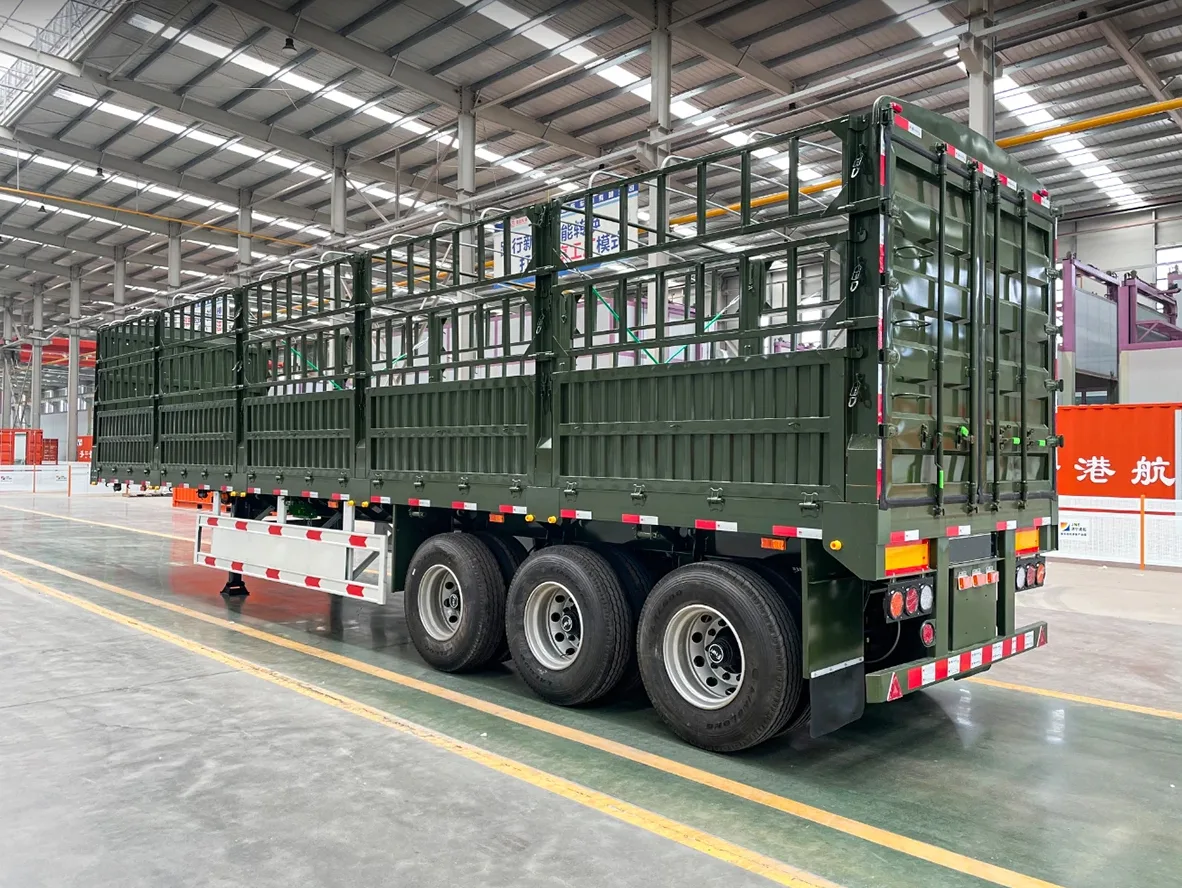
Across this region, the 3-axle setup is the everyday choice for general freight, while 4-axle configurations step in for denser construction materials and heavier palletized loads.For fleets that also run heavy plant haulage, the fence trailer typically complements — not replaces — a lowbed semi trailer, which is why many buyers quote both in the same enquiry.
W-Beam Advantage: 1.5 Tonnes Lighter Dead Weight
The single most quoted engineering feature in this category is the W-shape through beam. Instead of a conventional straight cross-member layout, the W-profile beam runs through the floor structure, increasing the contact surface between beam and floor board and reducing floor sinking under concentrated loads — the failure mode that shortens the life of cheaper fence trailers carrying heavy bagged cargo. Finite element analysis is used to cut whole-vehicle mass by about 1.5 tonnes against standard products without reducing structural strength. For a fleet running loaded kilometers every week, that is 1.5 tonnes of legal payload recovered on every trip, plus measurably lower tire wear and fuel consumption. Buyers who evaluate trailers on lifetime cost rather than purchase price will recognize the shape of this argument — it is the same logic we detail in why unit price alone misleads African fleet purchases.
What Buyers Specify When Ordering
A fence trailer enquiry that ends well usually contains five decisions: axle count and payload class from the table above; fence height and stake spacing matched to the cargo or animal profile; gates and penning layout for livestock work; tire and suspension specification for the corridor’s road conditions; and the deck length that fits the tractor fleet. Because most fence trailers leave the line built to order, buyers with non-standard requirements — from double-deck livestock cages to removable panels — can have them engineered at the factory rather than retrofitted locally, a process covered in how to spec custom semi trailer builds. Hand your cargo list, route conditions and target axle class to our team through the inquiry form, and the engineers reply with a configuration and factory-direct quote, usually within 24 hours.
FAQ
Can a fence trailer transport livestock?
Yes. The 1800 mm fence height and optional gates suit livestock transport, and dedicated cattle configurations are available from the factory.
How much lighter is the lightweight fence trailer?
The W-shape through beam design makes the tare weight about 1.5 tonnes lighter than standard products, which reduces fuel consumption and tire wear while restoring legal payload.
Which axle setup can I order?
Three choices: 2-axle for 20–40 t on 8 tires, 3-axle for 30–60 t on 12 tires, or 4-axle for 40–100 t on 16 tires. Every build uses 13/16-tonne-rated axles and 12R22.5 tires.
Can I set the fence height for my cargo?
Yes. The standard side fence is 1800 mm, but we can build it taller or shorter to match how your load stacks.
Sourcing fence semi trailers for livestock or cargo operations? Tell Vehicle Master your axle class, fence height and destination port through the inquiry form, or message the export team on WhatsApp — you will get a full specification sheet, a livestock or cargo configuration recommendation and a factory-direct quote, usually within one working day.