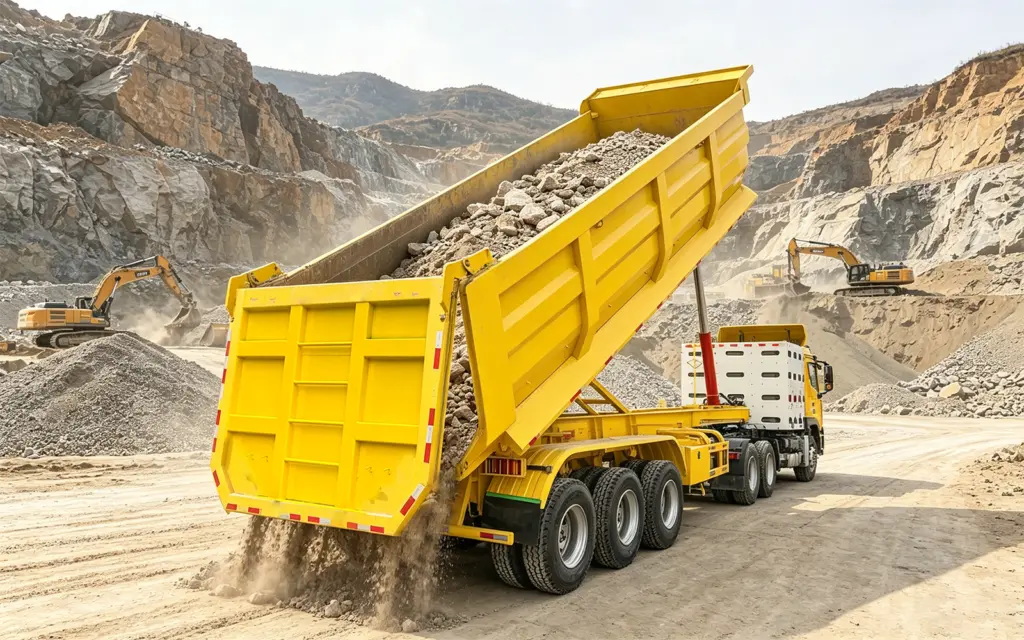
-
By haoyue
-
September 28, 2026
- 0 Comment
Tipper Semi-Trailer Market In Africa: Where The Demand Is Coming From And What Buyers Are Specifying
20 Trucks Running Three Shifts A Day, And Still Not Enough
Two numbers from operators we spoke to this quarter. In Tanzania, a gold mine operator keeps 20 tipper trailers moving overburden and ore around the clock — and still needs six additional units this quarter. In Lagos, a contractor on the city’s expressway expansion reports his tipper fleet is fully committed for the next six months, and he’s declining new work because no trailers are available.
This isn’t hype. The tipper semi-trailer African market is moving fast, and the demand isn’t coming from one place. It’s stacking up from three different sectors simultaneously, each with its own spec requirements. This insight breaks down where the demand is actually coming from, what configurations buyers are ordering, and the decisions that separate a good purchase from a costly one.
Where The Demand Is Actually Coming From
Tipper trailers don’t sell because of a single trend. They sell because three downstream industries are all expanding at once — and each one pulls the market in a slightly different direction.
-
Infrastructure earthworks.Road projects, housing developments and port expansions all move massive volumes of soil, gravel and fill material. A single highway project can consume 50+ tipper trailers for its duration. What these buyers want: reliable, mid-capacity units (25–35 cubic meters) that can handle mixed road conditions and frequent loading cycles. The priority here is uptime, not maximum payload.
-
Mining overburden and ore haulage.Mining operations — gold in Tanzania and Ghana, copper in Zambia and DRC, coal in Mozambique — require heavy-duty tippers that can handle abrasive material, steep pit roads and 18+ hour daily operation. These buyers want thicker-walled boxes, stronger hydraulic systems and axles rated for sustained overload conditions. Payload per trip matters more than anything else.
-
Urban material shuttle.Cities are where the daily churn of sand, cement, aggregates and demolition debris happens — quarry to depot to site, short distances, tight spaces, all day long. For these operators, the spec priorities are different: a nimble trailer with low tare weight, easy maneuvering and clear visibility beats a heavy-duty mining build that’s simply overkill for city streets.The result: a single supplier’s “standard tipper” rarely fits all three. Buyers who don’t identify which segment they’re actually in end up with a trailer that’s either over-built (and too expensive) or under-built (and breaks too soon).
What Configurations Buyers Are Actually Ordering
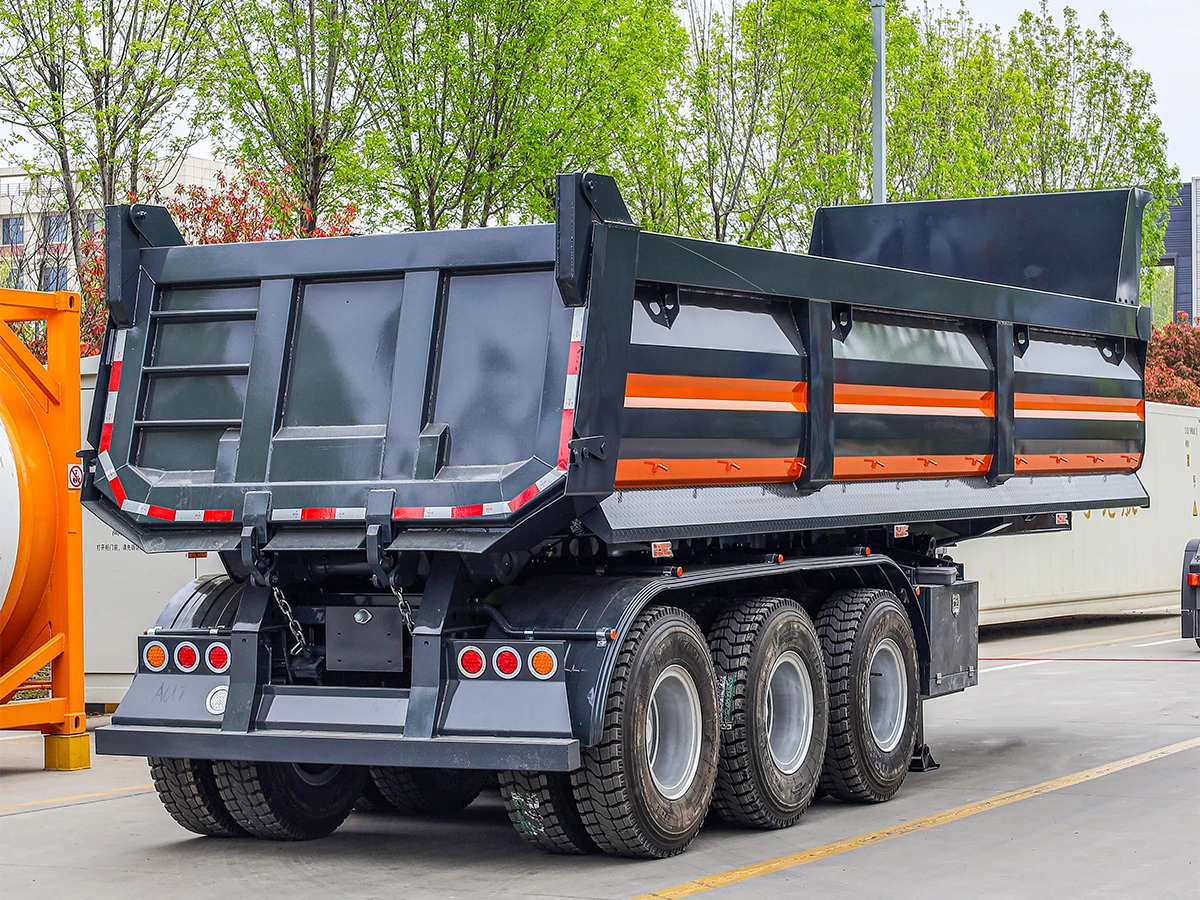
- 25–30 m³ boxes dominate the general construction segment. They’re versatile enough for soil, aggregates and light demolition waste.
- 35–45 m³ boxes are standard for mining overburden, where volume per trip directly affects revenue.
- The floor and front wall steel often comes down to one calculation: how many tons will pass over that plate before it needs replacing? In mining, where every load is rock-on-steel abuse, operators are moving to Hardox or NM-series wear plate even though it costs 15–25% more up front — because they’re finding the floor survives two to three times longer before replacement. For soil, sand and aggregate haulage, ordinary Q345 is still the sensible call.
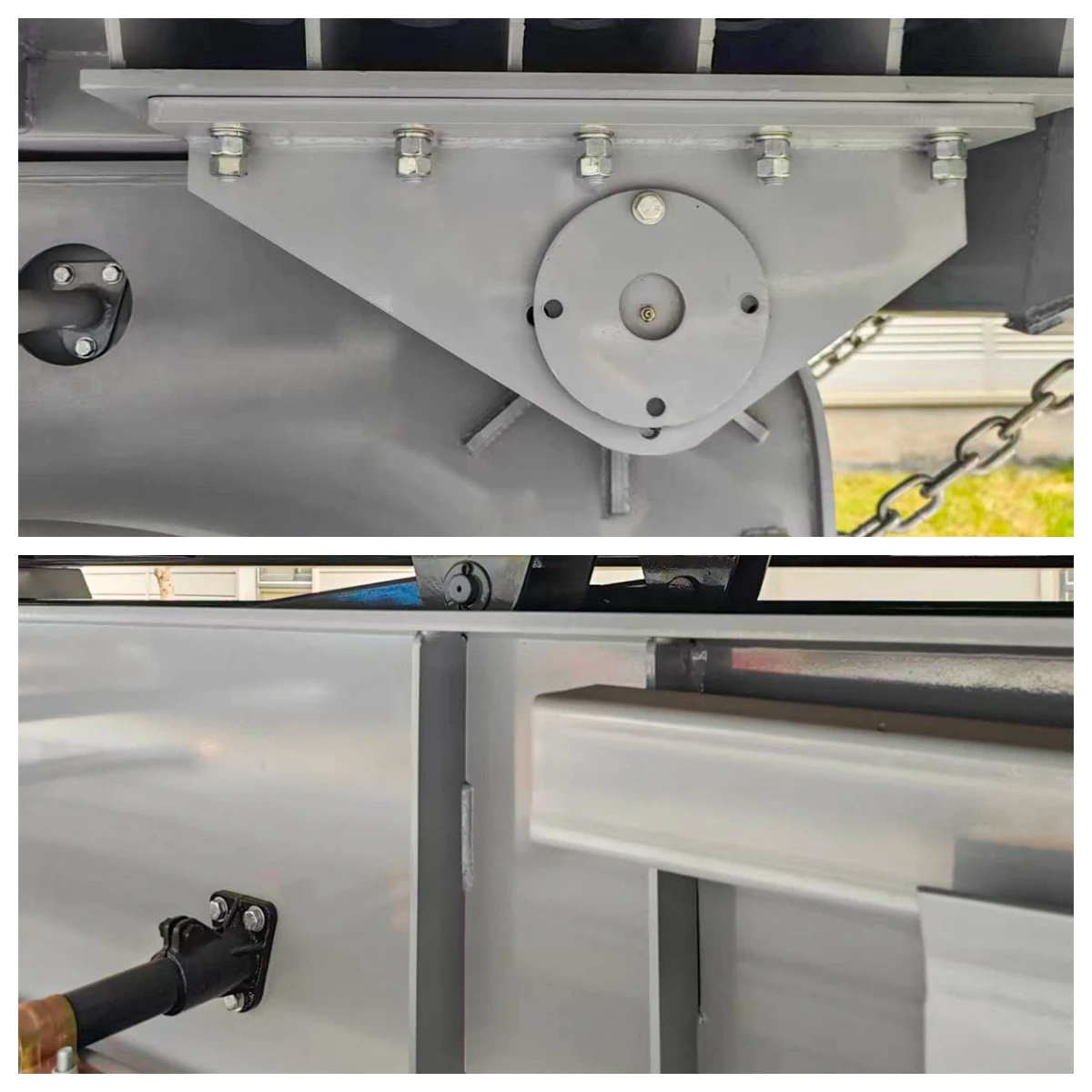
- Front-end telescopic cylinders (mounted at the front of the box) are the most common choice for 30 m³+ tippers. They provide stable lifting for heavy, uneven loads and require less mounting space under the box.
- Mid-mounted under-body cylinders these days mostly show up on light-duty tippers or older spec sheets. Their share keeps shrinking, and it’s easy to see why — the mounting position reduces ground clearance, and rough site roads leave the cylinder exposed to impact damage that’s costly to repair.
- A growing number of buyers are specifying dual-cylinder systems for extra stability when tipping on uneven ground — a real concern on mining sites where the dumping area isn’t always level.
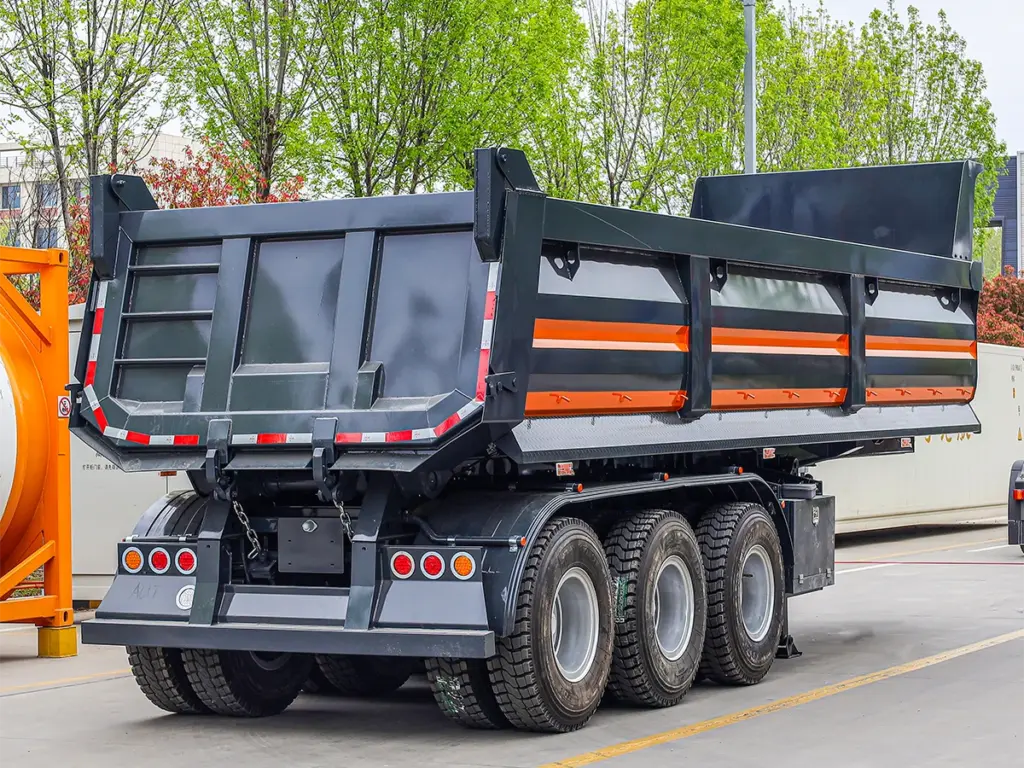
- 3-axle tippers are the volume leader across all segments.
- For mining, 16-ton rated axles with heavy-duty leaf spring suspension are becoming the default, replacing 13-ton axles that were common a few years ago.
- Bogie suspension is specified for operators who run primarily off-road, where axle articulation matters more than highway ride quality.
The Three Decisions Buyers Get Wrong Most Often
-
Wear-resistant steel or standard steel?Short version: match the steel to the material. More than 30% abrasive loads — rock, ore, coarse gravel — means wear-resistant steel earns its higher price tag through floor life. Mostly soil, sand or fine aggregates? Standard steel is enough, and cheaper. The costly mistakes are the two extremes: buying Hardox for a soil fleet, or buying plain steel for ore and rock, which typically means floor replacement within 12–18 months.
-
Front lift or under-body lift?For anything over 25 m³ or 30 tons payload, front-end telescopic lift is the safer choice. It distributes load stress more evenly across the chassis and provides better stability during tipping. Under-body lifts work for smaller, lighter-duty tippers but are more vulnerable to damage from site debris and uneven terrain. If your routes include unpaved site access roads, front lift is almost always the better call.
-
Maximum payload or reasonable tare weight?It’s tempting to spec the thickest steel, the heaviest axles and the biggest box to maximize every trip. But every extra ton of tare weight is a ton of payload you can’t carry — and extra fuel you burn on every run. The sweet spot for most African operators is a 3-axle tipper with a 25–30 m³ box, 16-ton axles and a tare weight around 12–14 tons. That gives you 30+ tons of payload on most roads while keeping fuel and tire costs reasonable.
What's Next: 2026–2027 Trends Worth Watching
- Mining-segment tippers are getting bigger. Mines are scaling up production, and the equipment is following: 40 m³+ boxes and 4-axle layouts that were rare two years ago now show up in nearly every mining order we price. If your customers run pits, plan for this trend to keep pushing upward — the days of the 30 m³ mining standard are numbered.
- Wear-resistant steel is becoming a standard ask, not an upgrade. It’s no longer just mining operators who spec Hardox — general construction fleets are now putting it in the base requirements, because word has spread about what a standard floor costs them in re-sheeting and downtime. Buyers have done the lifecycle math themselves, and they’re arriving at the same conclusion we’ve been telling them for years: the premium pays for itself.
- Hydraulic system reliability is the new competitive battleground. Price is no longer the first question on a tipper inquiry — the first questions are now about the cylinder brand, the seal kit source and the pump’s duty rating. And buyers are right to ask: unlike a brake or a light that fails and still lets you roll, a dead hydraulic system means the box won’t lift, the load stays on, and the trailer is a parked liability until parts arrive.
- Local assembly and after-sales support matter more. Buyers are increasingly prioritizing suppliers who can provide spare hydraulic parts and box repair support within their country, rather than waiting for shipments from overseas.