

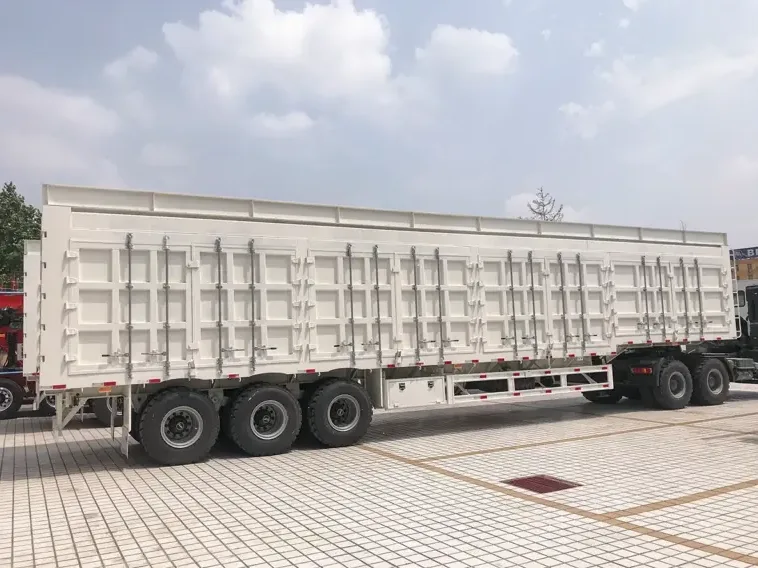
Curtain Side Semi Trailers: How They Compare to Box Vans, Side Walls and Flatbeds
Every covered-cargo inquiry we handle at Vehicle Master starts with the same fork in the road. The cargo needs protection from rain and dust, but the operations team wants loading speed, and the finance team wants the lowest possible tare weight. A curtain side semi trailer is the spec that answers all three pressures at once — and it is also the option most buyers know the least about.
To understand the curtain side, look at the platform, not the body. It is not a separate model in its own right; it is simply one of several body styles built on our box van trailer platform, alongside the standard van, the side blind type and the wing opening type. That family relationship matters, because every option is compared on the same foundation—the same chassis, the same 13,000 mm frame and the same axle choices. Once those are level, the real decision comes down to your loading method, your cargo and your routes.
The Curtain Side Semi Trailer, Defined
Picture a box van with its solid side walls replaced by a sliding PVC curtain. The roof stays rigid, the front wall stays rigid, the rear doors stay. The curtain runs on overhead rails and slides back in seconds, which opens the entire side of the trailer for forklift loading. Wrapped tarpaulin edges and rain gutters keep the load waterproof and dustproof when the curtain is closed. That is the entire concept: box van protection, flatbed access.
On our production line the curtain style is ordered as a variant of the box van semi trailer: same no-vertical-beam through-going frame, same submerged-arc-welded and shot-blasted longitudinal beams, same door position choices (rear swing, side swing, roller shutter). Buyers who specify a curtain usually pair it with tandem-style sides for mixed pallet heights.
Curtain Side vs Box Van: The Core Trade-Off
Think of the box van as the starting point. Its standard 13,000 × 2,550 × 2,400 mm body is built from 0.9 mm profiled-rib steel that keeps it light yet rigid and fully weather-sealed, offering close to 80 CBM of cargo space. The 3-axle layout is rated for 30–60 tons (2 axles cover 20–50 t, 4 axles 60–100 t). It typically carries palletised FMCG and food-and-beverage loads, with insulation available when required, and it can also move covered coal or mineral cargo to keep dust contained.
The curtain side trades two things against it:
- Loading face. A box van loads through rear doors and maybe one side door. A curtain side opens the full length of both sides, so a forklift works the trailer without driving inside it. On multi-drop distribution runs this is the difference between a 40-minute and a 15-minute unload.
- Security and insulation. A curtain can be cut. High-value electronics, pharma or bonded goods belong in a steel box. The insulation option that keeps beverages cool in a box van is also harder to engineer around a sliding curtain.
For African distribution fleets the usual pattern we quote is a mixed fleet: box vans on the high-value city runs, curtain sides on the regional multi-drop lanes where speed and rain protection both matter.
Curtain Side vs Side Wall vs Flatbed: How to Choose the Right Trailer
A side wall semi trailer gives you removable boards — flexible for mixed and oversized-below-deck cargo, but the load is exposed. A flatbed is fully open for container twists and long steel. The curtain side sits one step above both in protection and one step below in flexibility:
| Spec | Curtain Side | Box Van | Side Wall | Flatbed |
|---|---|---|---|---|
| Side loading | Full length, seconds to open | Rear + one side door | Over the boards | Full open |
| Rain / dust protection | Waterproof, dustproof | Sealed box | None (tarp needed) | None |
| Theft resistance | Moderate | High | Low | Low |
| Pallet / forklift work | Excellent | Good | Fair | Good (no restraint) |
| Tare weight | Light-medium | Heaviest | Light | Lightest |
| Typical cargo | FMCG, bagged grain, building materials | High-value, insulated, express | Mixed general, livestock configs | Containers, steel, machinery |
The Specs That Decide the Comparison
Because all four bodies can sit on essentially the same chassis, comparing offers comes down to a short list. Check these line by line:
- Main beam: 500 mm height, Q345/T700 material, upper/middle/lower plates 14/8/16 mm — a through-going no-vertical-beam frame carries the curtain loads without twist.
- Axles and suspension: 3×13/16 t FUWA or BPW axles, mechanical or air-ride. Air suspension pays off on curtain-siders doing urban delivery work.
- Doors and curtains: verify the curtain track specification, the curtain panel count (single- or double-sliding), and the rear door design before placing the deposit—not after.
- Tires and landing gear: 11.00R20 or 12R22.5 (Linglong / Triangle / Double-Coin / Bridgestone options) and a JOST 28 t two-speed landing gear are the standard fit.
Running Costs: Curtain Sides in Daily Operation
Over a five-year hold, the curtain side usually wins the cost argument against both neighbours. A torn curtain section is a fabric job — measured in hours and a few hundred dollars — while a punctured box van panel means panel beating, repainting and downtime. Washing a curtain body between food-grade and general cargo takes minutes compared with sweeping and wiping a full box. Two habits keep the economics intact: latch the curtain fully at every lock point before departure (an unsecured curtain billows and tears at highway speed), and keep the overhead rails greased so the curtain keeps sliding one-handed. Fleets running dust-heavy lanes should also ask for the heavy-duty PVC gauge and double-stitched rain gutters — a small up-front line item that pushes the first curtain replacement from year three to year six.
Where Curtain Sides Fit African Freight Lanes
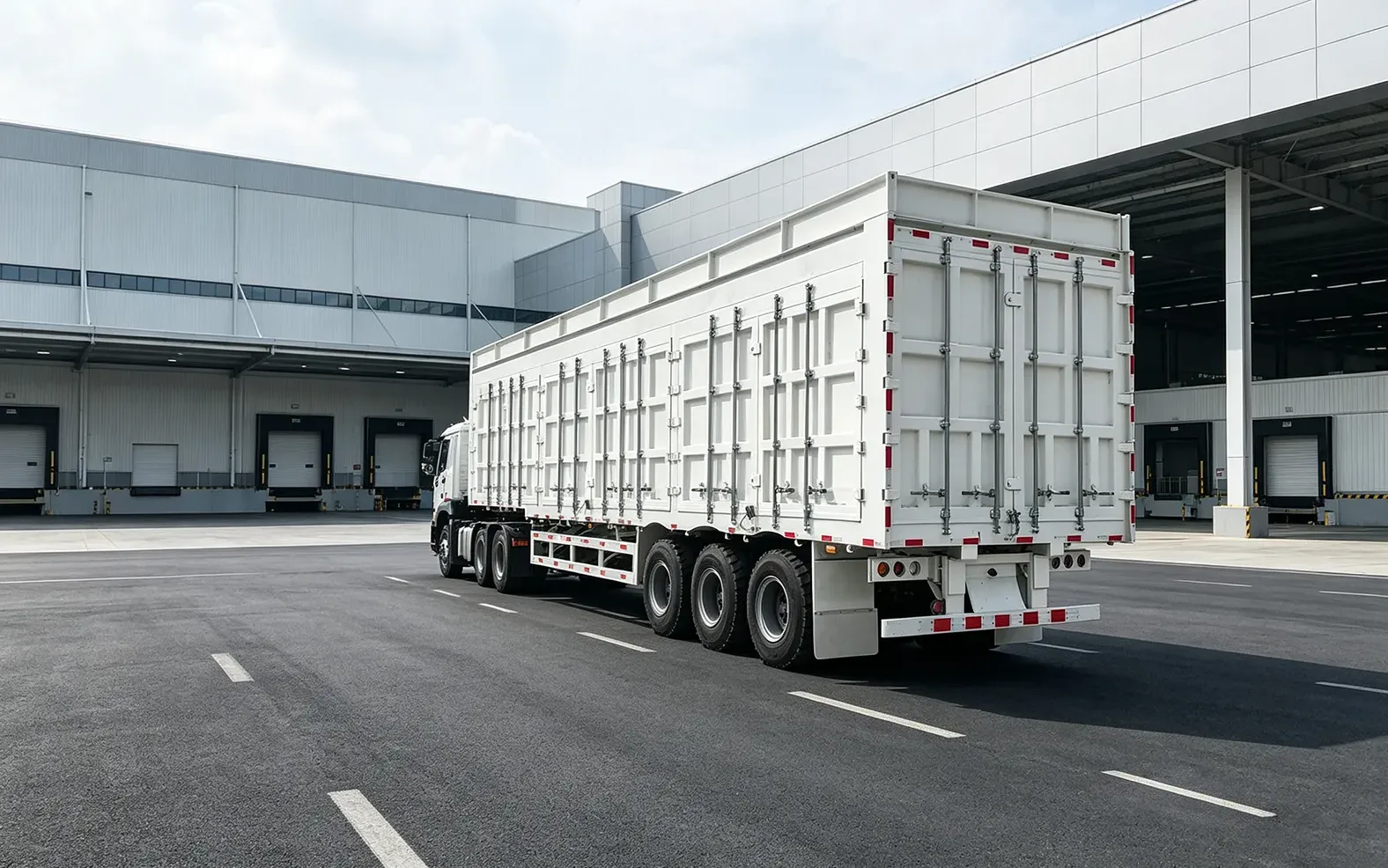
A curtain side earns its money back quickest on regional pallet delivery, wet-season runs of bagged grain and cement between depots, and mixed building-material loads that need rain protection rather than a sealed box.What a curtain does not cover, something else in the lineup does better: loose bulk cement belongs in a pneumatic cement tanker, livestock in a fence semi trailer, and out-of-gauge machinery on a lowbed.
If your lanes look like the first group, bring your route profile and pallet mix to our team via the inquiry form — we quote curtain sides, side blinds and wing openers on the same platform so the comparison is exact, not estimated.
Choosing between a curtain side, a box van and a side wall trailer? Send your cargo list and route map through the contact form or message us on WhatsApp at +86 166 6658 9022 — the Vehicle Master sales engineering team will spec the right body style and axle configuration, with factory-direct pricing returned within 24 hours.