

Tipper Trucks Market Outlook: The Numbers Behind Steady Growth and Fast-Changing Buying Patterns
Forecasts for the global tipper trucks market agree on the headline and disagree on almost everything else. Analysts disagree on the starting size — one estimate is USD 36.01 billion in 2026, another USD 28.6 billion in 2025 — but they point the same way: roughly 5.6% annual growth that carries the market to about USD 50 billion by 2032. Strip away the methodology gaps and the takeaway is consistent: steady mid-single-digit expansion overall, outpaced only by specific regions, weight categories and powertrain types.
For haulage fleets and equipment buyers in Africa, the Middle East and Southeast Asia, the aggregate number matters less than the structure underneath it. Where the demand sits, which vehicle formats are winning share, and what buyers now specify per order — those are the signals that decide whether your next tipping equipment purchase is priced for this cycle or the last one.
How Large Is the Tipper Truck Market, Really?
The spread between published estimates is wide because the boundaries differ. Narrow “tipper truck” definitions count rigid and articulated tippers used in construction and aggregate hauling; broader “dump truck” scopes fold in mining-class machines and can triple the headline. Three reference points are enough to frame the conversation:
- Research and Markets projects the tipper trucks market at USD 36.01 billion in 2026, reaching USD 50.10 billion by 2032 at a 5.64% CAGR.
- Grand View Research values the tipper truck market at USD 22.7 billion in 2025, rising to USD 32.9 billion by 2033 at 4.8% — and reports North America holding a 37.2% revenue share in 2025.
- QYResearch estimates USD 28.6 billion in 2025 growing to USD 43.3 billion by 2032 at 6.1%.
Read together, the message is consistent: this is a USD 25–36 billion market compounding in the 5–6% range — not a boom, but a durable expansion tied to infrastructure programmes, mining output and fleet replacement cycles that run in every region simultaneously.
What Is Driving Demand
Three forces carry the growth. First, infrastructure pipelines: highways, rail corridors, dams and urban expansion all consume sand, gravel, crushed stone and demolition material — cargo that only moves in tippers. Second, mining economics: operators are focused on cost-per-ton productivity, which rewards higher-payload configurations and pushes replacement of aging fleets toward more efficient units. Third, the aggregate supply chain itself: quarry consolidation in many markets means longer haul distances from pit to site, which favours bigger payloads per trip and reshapes what a “standard” tipper looks like in each region.
This third factor is the one buyers most often overlook. Once the haul between quarry and batching plant grows from 15 km to 60 km, the economics of moving each tonne per kilometre shift enough to change the optimal vehicle — typically away from a rigid tipper and toward a tractor paired with a trailer.
The Regional Picture: Asia-Pacific, North America and the Middle East & Africa
Broad dump-truck market studies put Asia-Pacific at roughly 71% of global volume, anchored by China and India’s construction cycles. North America leads revenue in the narrower tipper truck scope, sustained by highway programmes and a mature replacement market.
The Middle East & Africa is the swing region. It is smaller in absolute terms, but its demand is concentrated in high-wear applications — copper and manganese corridors in Central Africa, gold and platinum haulage in West and Southern Africa, cement and aggregate runs serving Gulf mega-projects. We looked at this in detail in our analysis of the tipper semi-trailer market in Africa: buyers there are not spec-ing generic tippers, but tonnage-specific configurations matched to mine access roads, axle-load enforcement and cross-border corridors.
Gulf demand for construction equipment alone is projected to expand at over 5.5% a year through 2030, powered by major urban programmes in Saudi Arabia and the UAE — and that growth pulls tipper demand along with it right across the broader region.
Rigid Tipper Trucks vs Tipper Semi Trailers: Where the Market Splits
Inside the numbers, one segmentation matters most to equipment buyers: rigid versus articulated. Grand View Research pegs the rigid tipper segment at 54.5% of the 2025 market — still the majority — with the 10–20 ton payload class and 6×4 axle configurations leading volume.
But rigid dominance is a legacy of short-haul, paved-route duty cycles. Wherever haul distances stretch, roads degrade or payloads climb past 40 tons, fleets shift to tractor-and-tipper-trailer combinations:
- A rigid tipper carries its bed on a fixed chassis — built for tight urban sites, simple to maintain, but payload is limited by its own axle count.
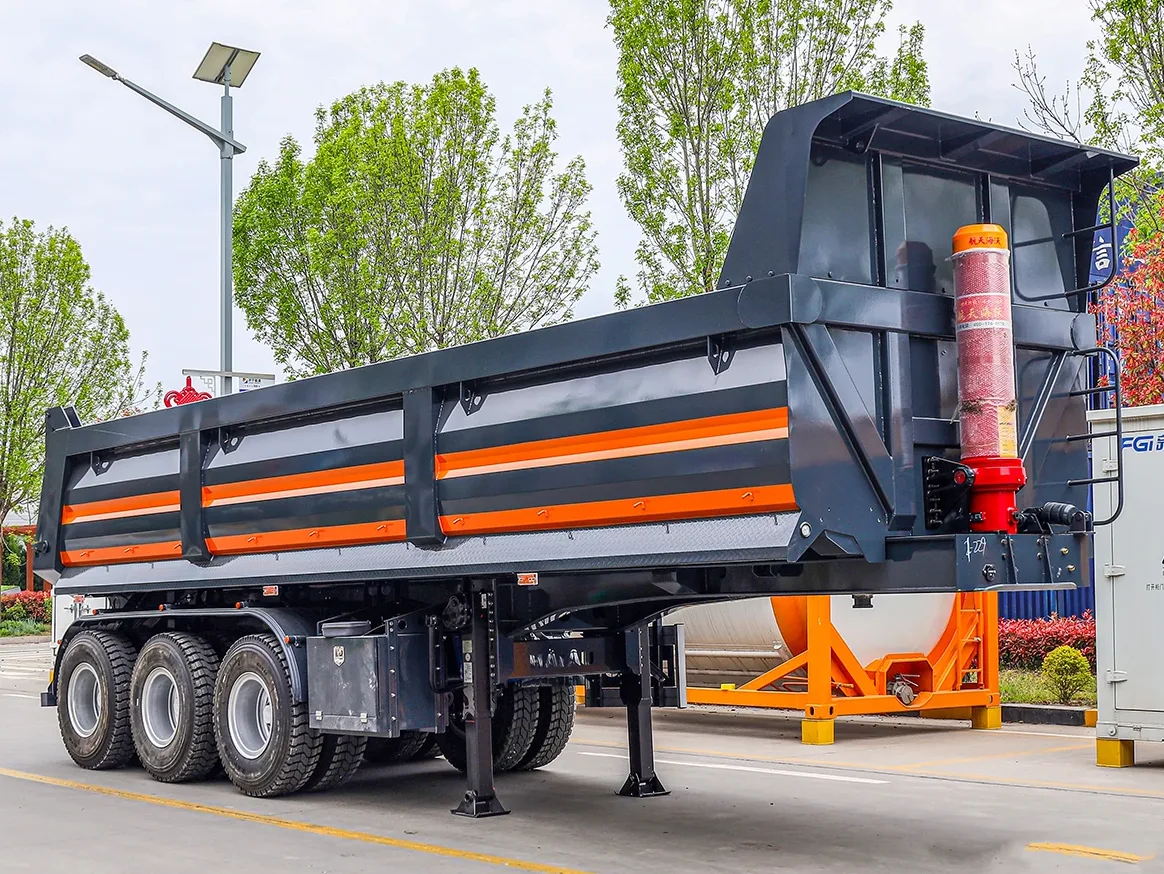
- A tipper semi trailer adds a dedicated tipping body to a prime mover — 3- or 4-axle configurations take payload from 30 up to 100 tons, and the tractor stays in service year-round on other trailers when earthworks wind down.
That flexibility is why African mining and aggregate operators increasingly order trailer-based combinations. A rear dump semi trailer in the 50–80 ton class moves the same daily tonnage as two rigids with one driver, and heavy configurations like the 80-ton end dump are built specifically for mine haul circuits where every extra ton per cycle compounds into the cost-per-ton result.
The split also follows finance structures. Rigid tippers are often bought as complete units from truck dealers with captive finance. Trailer combinations are bought separately — prime mover locally, trailer from a specialist manufacturer — which is where cost-optimised sourcing from factories like ours enters the picture.
What Fleets Are Actually Specifying in New Tipping Equipment
Across the orders we handle, four specification decisions now dominate the conversation:
- Floor and body steel. Buyers ask for wear-resistant plate by name — 5 mm manganese steel floors and 4 mm side walls on mining-spec units — because body life, not tractor life, sets the rebuild interval in high-abrasion duty.
- Tipping direction. Rear dump remains the default for aggregate and demolition work, but mine sites are switching to side tipping where tipping pads are narrow or dual-side loading applies. The 3-axle side tipper with twin cylinders and mechanical safety locks has become the reference configuration for that duty.
- Tonage bracketing. Orders bunch into 30, 50, 60 and 80–100 ton classes instead of spreading evenly across the scale — fleets buy for specific corridors, not for all-round flexibility. Our guide to rear dump sizes and ton ratings maps how those tiers translate into axle count and body volume.
- Suspension and running gear. Mechanical suspension for rough mine access, air suspension where road conditions allow — decisions that directly shape tyre life and maintenance cost per kilometre.
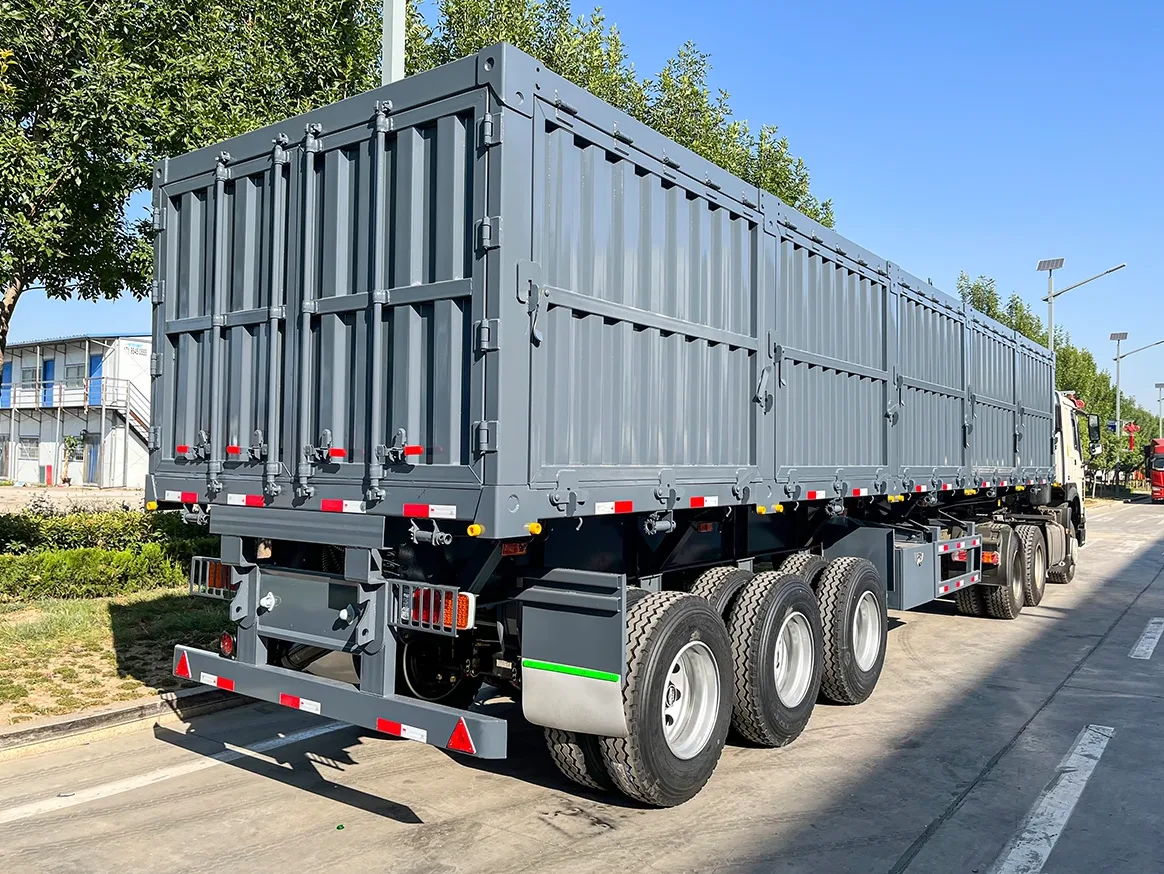
The pattern across all four: buyers arrive with a defined duty cycle and expect the supplier to match it, not the reverse. Generic one-size tippers are losing ground to configuration-based quoting.
Electrification and Autonomy: The Long-Term Watch Items
Two technology shifts sit at the edges of today’s tipper demand but are compounding fast. In the mining dump truck segment, battery-electric units are growing at roughly 10.5% annually and autonomous haulage configurations at over 10% — from small bases, but concentrated in exactly the large open-pit operations that also buy tipping trailers for secondary haul. For road-going tipper fleets, emission rules in export markets increasingly shape which used trucks get dumped into African and Middle Eastern markets — a secondary-supply dynamic that local fleets price against when deciding between a used rigid import and a new trailer combination.
Neither shift changes what you should order this year. Both change what your fleet will be worth in five.
The Buying Takeaway
A market expanding at 5–6% a year won’t penalize you for ordering early — what it penalizes is getting the spec wrong. The fleets with the best cost-per-ton margins right now are the ones that lock down the duty cycle first (route, payload, tipping angle), then pick the equipment tier that fits, then negotiate tractor and trailer as a single package. For a view of how that plays out on African mine and aggregate corridors, our side dump and rear dump product pages carry the full specification ranges.
If you are mapping a fleet expansion against this cycle, hand the route data and target payloads to our team via the inquiry form — we quote matched trailer configurations, ton ratings and lead times against your specific corridor, usually within one working day.
Planning a tipper fleet order for the 2026–2027 cycle? Send your haul route, cargo density and target tonnage to our inquiry desk or message us on WhatsApp — you will get a configuration recommendation with axle layout, body steel and payload tier sized to your market, not a generic catalogue quote.