

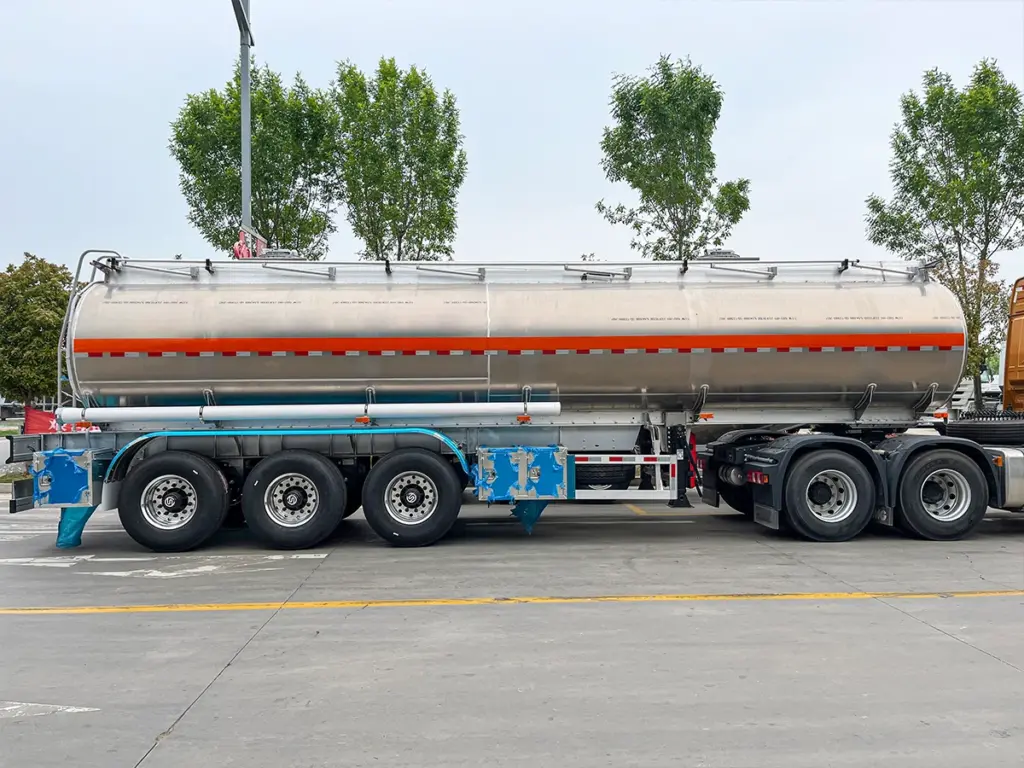
Liquid Tanker Semi Trailer: Types, Capacities and Buying Guide
A liquid tanker semi trailer is the workhorse behind fuel distribution, water supply, road-construction bitumen and chemical logistics across Africa. Yet it is also one of the most specification-sensitive trailers you can buy: the wrong tank material, an undersized axle configuration or a missing safety valve can turn a good investment into a fleet liability.
This guide explains the main types of liquid tankers, how tank materials compare, how to match capacity to your axle rating, and which details separate a well-built tanker from a cheap one. You can also browse the full liquid tanker semi trailer range to see standard specifications.
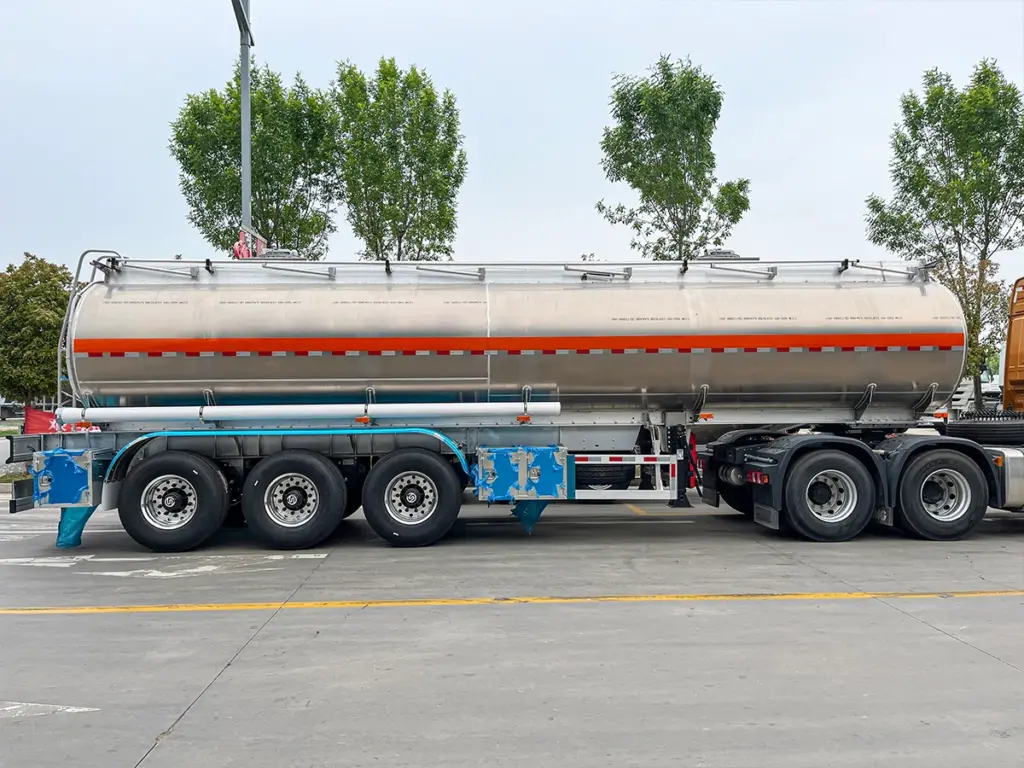
What a Liquid Tanker Semi Trailer Hauls
Unlike a powder tanker, which moves dry bulk cargo such as cement or flour with compressed air, a liquid tanker carries free-flowing liquids. The most common cargoes in African operations are:
- Fuel and oil – diesel, gasoline, lubricants for stations, mines and generator fleets
- Water – construction sites, dust control, mining camps and municipal supply
- Bitumen – heated and insulated for road paving projects
- Chemicals – acids, caustics and solvents requiring corrosion-resistant tanks
- Food-grade liquids – milk, edible oils and molasses in stainless steel tanks
Each cargo changes the specification. Fuel demands certified safety fittings, bitumen needs heating and insulation, chemicals dictate the tank lining, and food cargo requires polished stainless steel. That is why experienced buyers always start from the cargo, not from the price list.
Liquid Tanker Types and Their Typical Capacities
Fuel Tanker Semi Trailers
The most popular category. A 3 axle fuel tanker semi trailer is the regional standard for retail fuel distribution, balancing payload and maneuverability on mixed road conditions. For long-haul trunk routes, larger units such as the 60000L fuel tanker semi trailer cut the cost per liter delivered. Multi-compartment designs let you carry different products — say diesel and gasoline — in one trip.
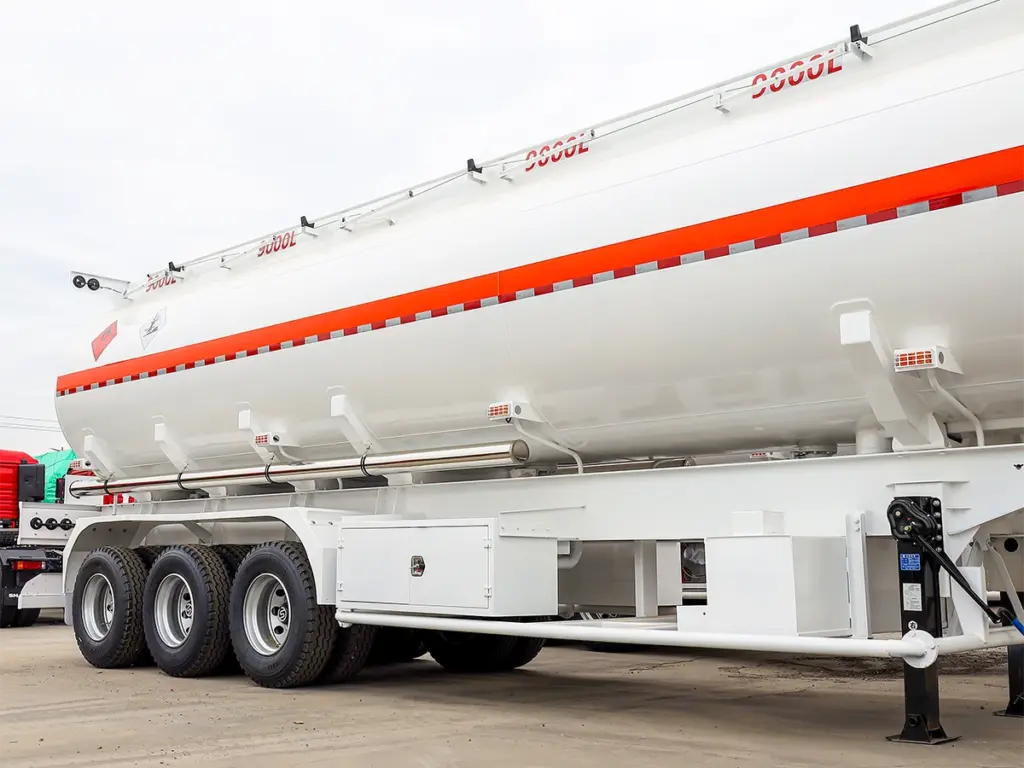
Water Tanker Semi Trailers
A water tanker semi trailer serves construction sites, mining operations and drought-affected regions. Water is heavier per liter than fuel, so tank volumes are usually smaller for the same axle rating.
Bitumen Tanker Trailers
A bitumen tanker trailer pairs an insulated tank with heating pipes (thermal oil or fire tube) so the asphalt stays pumpable over long distances. These units are in rising demand as road programs expand across East and West Africa.
Chemical Liquid Tanker Trailers
A chemical liquid tanker trailer is built around corrosion resistance — stainless steel, aluminum alloys or specialized linings — plus reinforced discharge systems for hazardous cargo handling.
Stainless Steel Tanker Trailers
A stainless steel tanker trailer covers food-grade loads and aggressive chemicals. Higher purchase price, longer service life, higher resale value.
Tank Body Materials: Carbon Steel vs Aluminum vs Stainless Steel
Material choice drives weight, durability, maintenance cost and resale value. Here is how the three standard options compare:
| Criteria | Carbon Steel | Aluminum | Stainless Steel |
|---|---|---|---|
| Tare weight | Heaviest | Lightest — more legal payload | Middle |
| Corrosion resistance | Needs lining & repainting | Excellent for fuel | Excellent, incl. chemicals |
| Typical cargo | Water, fuel (budget spec) | Diesel, gasoline, lubricants | Chemicals, food grade |
| Purchase cost | Lowest | Higher | Highest |
| Repair in Africa | Easiest — any welder | Needs skilled TIG welding | Needs skilled TIG welding |
For fuel fleets running high annual mileage, an aluminum fuel tanker trailer usually pays back its price premium through extra payload and lower fuel consumption. For water haulage or tight budgets, carbon steel remains the practical choice. Chemical and food operations should treat stainless steel as non-negotiable.
Capacities and Axle Configurations: Getting the Match Right
Liquid tanker capacities typically run from about 30 m³ to 60 m³, built on 2, 3 or 4 axle chassis rated at 13T or 16T per axle. Two rules keep you out of trouble:
- Match capacity to cargo density, not just to the tank size. A 45 m³ tank of diesel weighs roughly 38 tonnes; the same tank of water weighs 45 tonnes. Chemicals can be heavier still. Size the axles, suspension and king pin for the actual liquid, not the brochure headline.
- Match configuration to the route. A 3 axle tanker handles regional distribution and average roads; 4 axle and 16T specifications suit full-volume trunk haulage on better pavements. If your routes include soft ground or rainy-season detours, conservatively spec the running gear — the same logic we detail in why brake systems fail on African routes.
Standard running gear is proven: FUWA, BPW or equivalent axles, 12R22.5 or 11.00R20 tires from brands like Triangle or Bridgestone, JOST 2″ or 3.5″ king pins and 28-ton two-speed landing gear. Mechanical suspension is the default for rough roads; air suspension is available for premium fleets.
Build Quality Details Worth Paying For
When you compare quotes, look past the tank volume and check these construction points:
- Welding quality. Robot TIG welding with 100% X-ray inspection on tank seams — leaks on a fuel tanker are not repair items, they are incidents.
- Anti-surge engineering. Internal wave-proof baffle boards stop liquid surge from braking — the single biggest safety factor in tanker operation.
- Safety fittings. Breather (relief) valves, emergency bottom valves, fire arrestors, static grounding strips and ladders with anti-slip steps and roof walkways.
- Coating process. Electrophoresis anti-rust treatment before painting adds years of life in coastal and humid regions; polyurethane topcoats resist fuel staining.
- Low center of gravity. A gooseneck tank profile lowers the CoG and visibly improves stability on crowned rural roads.
- Discharge system. European-standard loading and unloading valves, plus pump and hose options that match your terminal equipment.
Buying Tips for African Fleet Operators
- Order against your cargo plan. Decide compartments, discharge method and material before comparing prices — comparing mismatched specs is how buyers get misled.
- Ask for inspection documents. Reputable factories supply X-ray reports and pressure test records for every tank.
- Budget the parts pipeline. Confirm seals, valves and wearable parts are standard items available in your market, not proprietary sizes.
- Consider the resale market. Fuel and water tankers resell fastest; exotic one-off specs do not.
- Verify after-sales terms. A 1-year warranty on main components and responsive technical support matter more than a small discount.
Frequently Asked Questions
Q1:What is the difference between a liquid tanker and a powder tanker?
A:Liquid tankers carry fluids through pumps and valves; powder tankers discharge dry bulk cargo like cement pneumatically with compressed air. The tank shapes, internals and discharge systems are completely different.
Q2:How many liters does a liquid tanker semi trailer hold?
A:Most models range from 30,000 L to 60,000 L depending on axle count and cargo density. Multi-compartment versions can split the volume across two to four chambers.
Q3:Which tank material is best for fuel?
A:Aluminum offers the best payload-to-durability ratio for diesel and gasoline. Carbon steel works on tighter budgets; stainless steel is mainly justified for chemicals and food-grade cargo.
Conclusion
Specified correctly, a liquid tanker semi trailer is one of the highest-utilization assets in a fleet — one trailer, many cargoes, year-round demand. Start from your liquid, choose the material and axle rating honestly, and insist on documented weld quality and safety fittings. Browse the liquid tanker semi trailer product range or contact the Vehicle Master team for a specification sheet matched to your routes and cargo.